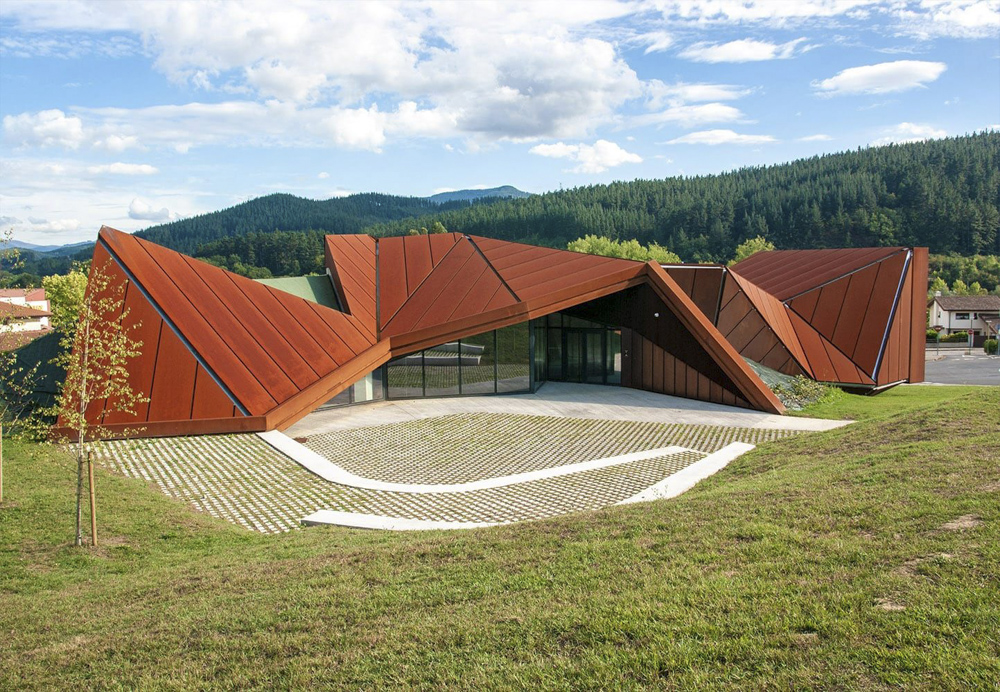
The convergence between design and science is the main objective of all the activities carried out at the Basque BioDesign Center, located in the municipality of Güeñes (Biscay). Among the work undertaken by its professionals, the effort to advance biodesign stands out, as well as their commitment to innovative materials and regenerative research. They start from natural raw materials or local waste—such as algae, fungi, mycelium, cellulose, bacteria, wool, or industrial scraps—and transform them into new sustainable materials.
But sustainability is not the only NEB value it embodies. Its design model integrates aesthetics, culture, identity, and territory through the revalorization of local traditions, such as the wool of Latxa sheep, historically used to make mattresses. The organization understands design as a tool for social, environmental, and cultural transformation—one that goes beyond the product itself and embraces the values of the community it serves.
The question is: how are they able to combine collective creativity, local knowledge, and cutting-edge technologies? They do so through several lines of work focused on research, innovation, training, and international collaboration, the latter through artistic mobility programs. Their main research branches include:
- ARDIBELTZA Project. Focused on the sustainable valorization of Latxa sheep wool, including the extraction of lanolin—a natural wax produced by some mammals that can have pharmaceutical, industrial, and domestic uses.
- ONDDO. Dedicated to developing materials for packaging, construction, and textiles from agricultural or forestry waste and wool, combined with mycelium, the vegetative part of fungi.
- ZELUBAK — Bakterio ZELULOSA. This initiative aims to obtain a flexible, thermoformable material that can meet the decorative design needs of the automotive industry, both as an alternative to animal leather and to decorative plastic finishes.
- GROWING FUTURES. Researches sustainable biofabrication using mycelium, in a process that integrates nature, art, and technology.
The BBC also trains professionals capable of working with the biomaterials it develops. Its website states: “We train the designers of the future.” It offers intensive courses and bootcamps on Biocouture haute couture and the use of the TC2 digital loom, a digital version of the traditional Jacquard loom.
In addition, the center offers artistic and research residencies that foster interdisciplinary collaboration and creativity. These residencies make it possible to imagine future scenarios linked to the bioeconomy, encouraging the creation of concepts and prototypes. Residents have access to the center’s tools and equipment, along with technical and teaching support to develop their proposals.
In essence, the Basque Center for Biodesign is a paradigmatic project aligned with the principles of the New European Bauhaus, opening pathways toward a future where industry coexists with nature: it respects resources, promotes beauty and dignity, and strengthens traditional local communities.