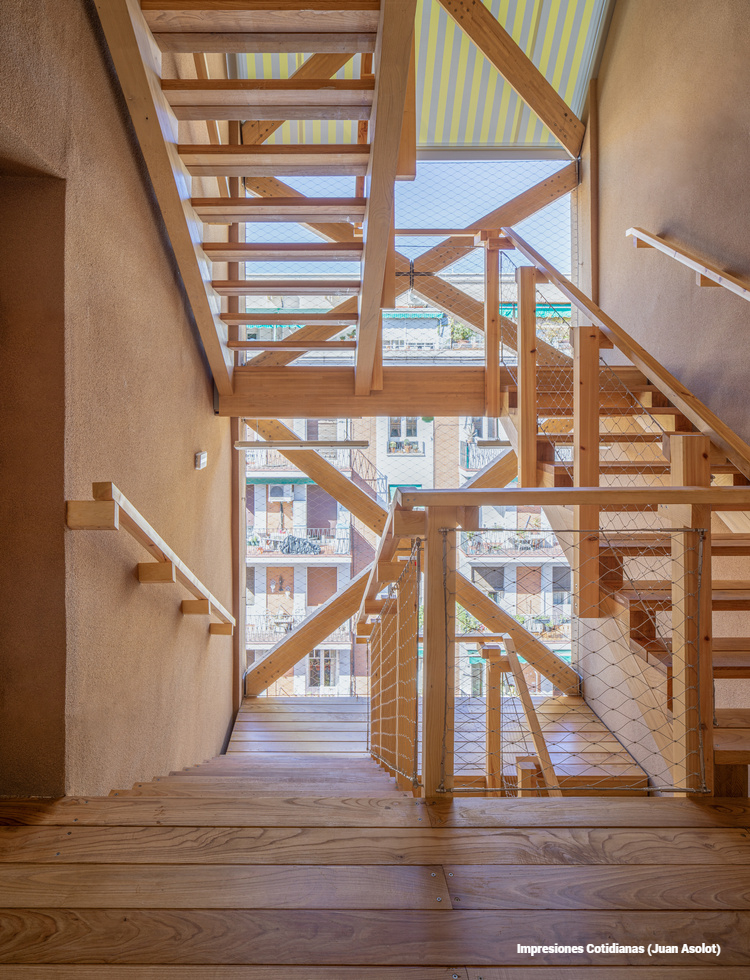
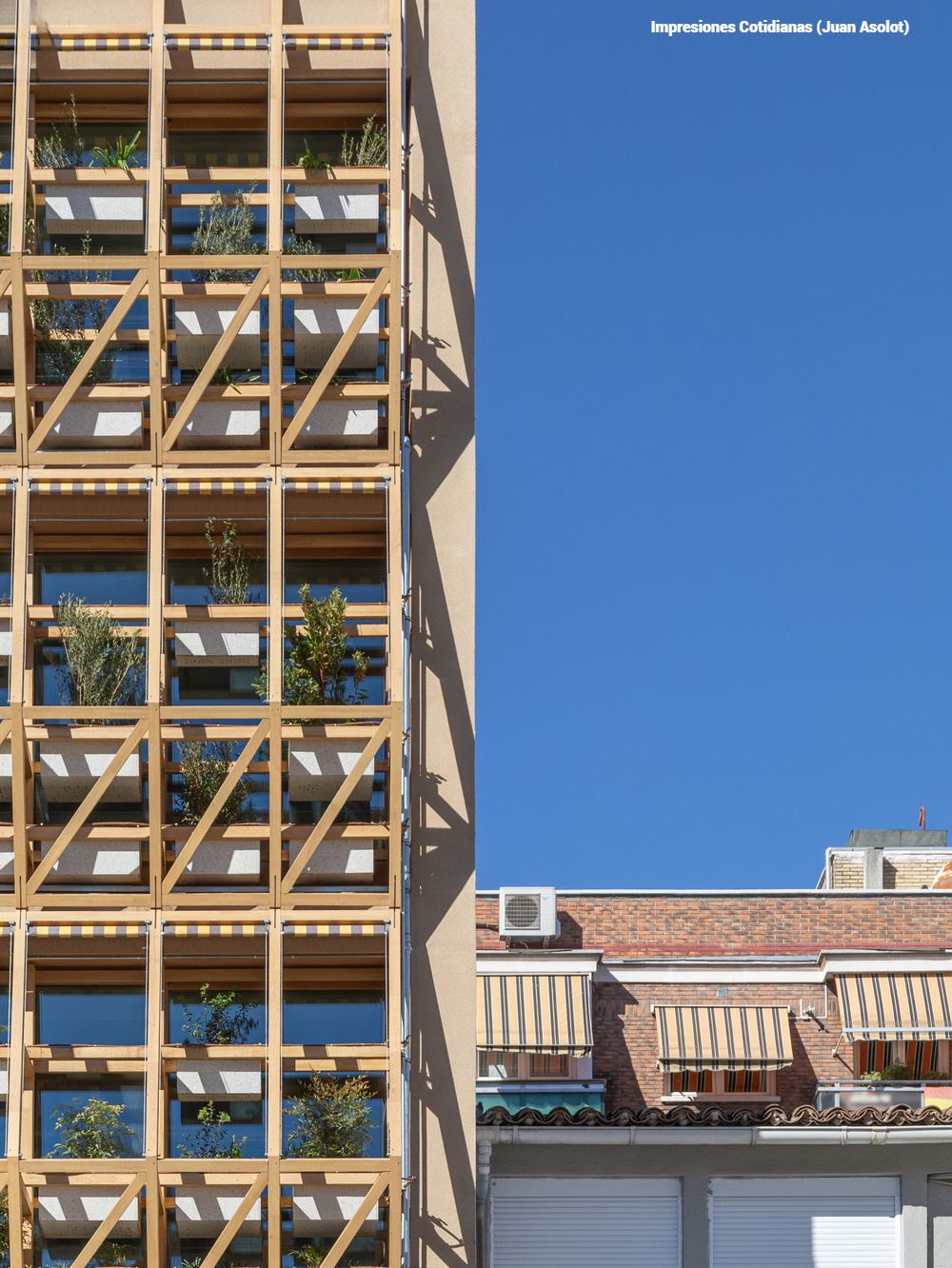
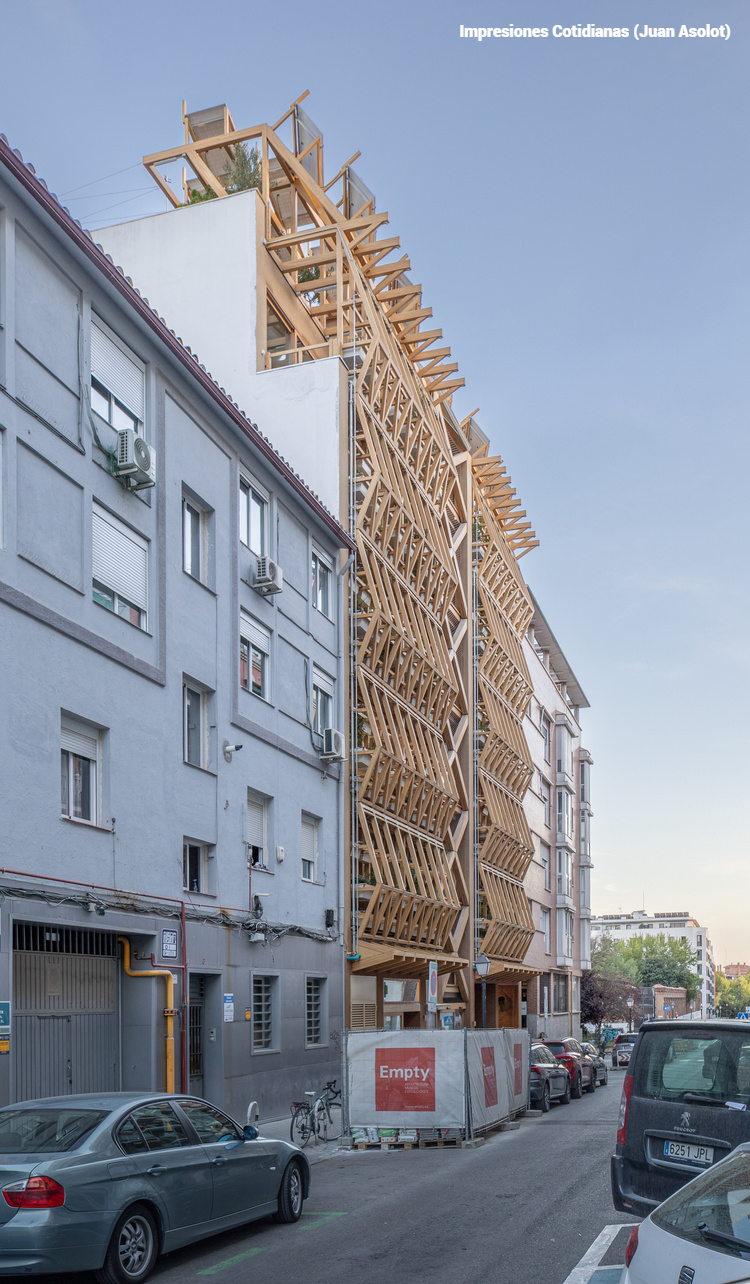
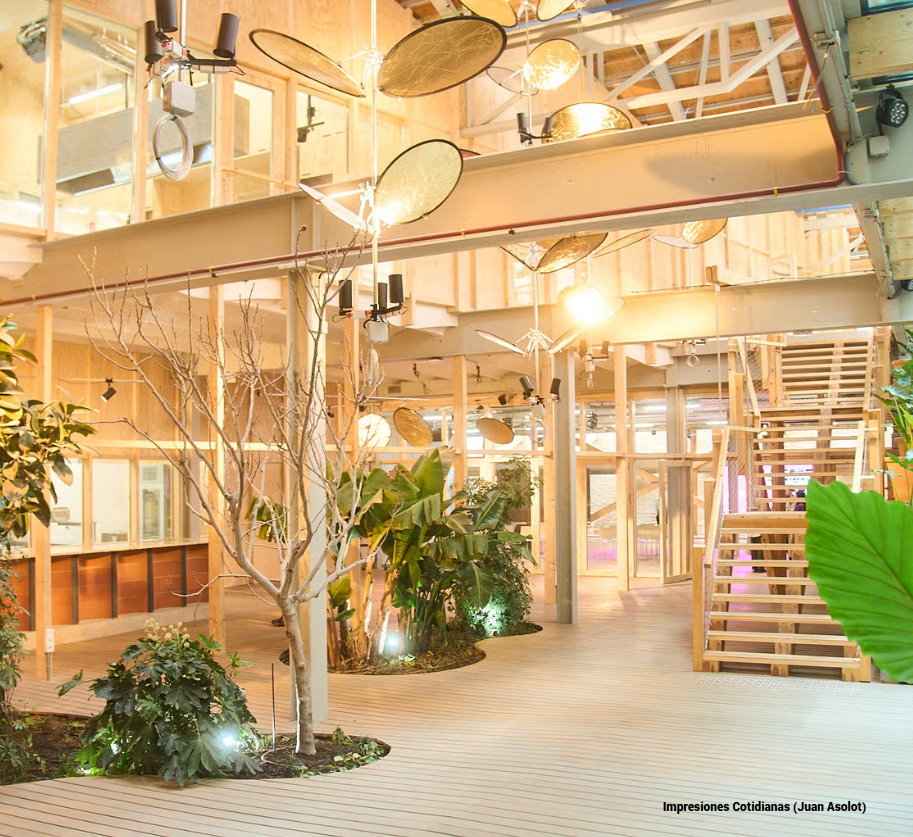
Asturian chestnut wood makes up its façade, which sits atop a heritage structure from an old factory, now saved from demolition. Solar panels supply energy for its activities, and the temperature of its facilities, equipped to host cultural, educational, and business events, is regulated by a sustainable, high-efficiency aerothermal system. This could be a brief description of the Infinito Delicias building in Madrid.
It opened its doors to the public for the first time on December 13, thanks to the Daniel and Nina Carasso Foundation, with the aim of promoting the arts, gastronomy, and social and economic innovation. In the words of its director, Francesco Cingolani, it is “an uncontrolled and open environment that allows things to happen.” All this takes place in a neighborhood very close to Atocha, which is on the move, increasingly inviting companies and associations to participate in its ecosystem.
Its promoters define it as a third place, according to sociologist Ray Oldenburg’s concept, a context in which people can meet, learn, and create connections that is different from home and work. Infinito Delicias operates without rigid rules, a place designed for coexistence and the consolidation of a dynamic and participatory community, closely linked to culture and ecological transition.
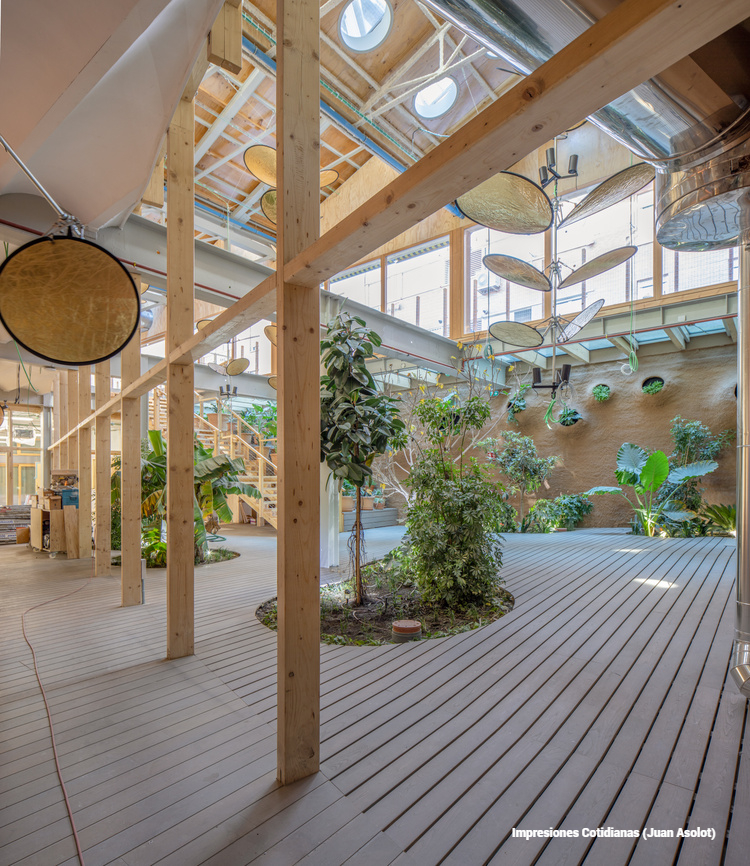
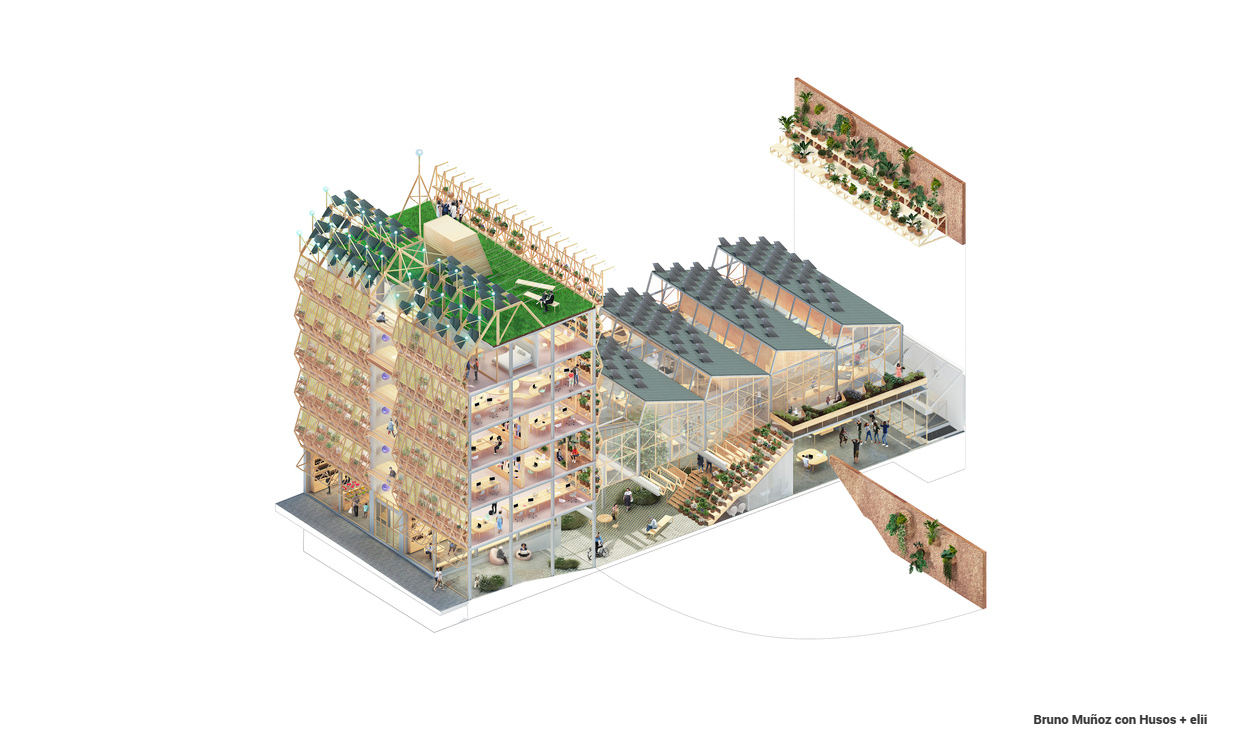
What’s more, its very conception, framed by the values of the New European Bauhaus, stems from the renovation of the old facilities of a factory that was going to be demolished to build housing. The building’s energy design is essential, with vegetation being one of the temperature regulators, along with, of course, its aerothermal system.
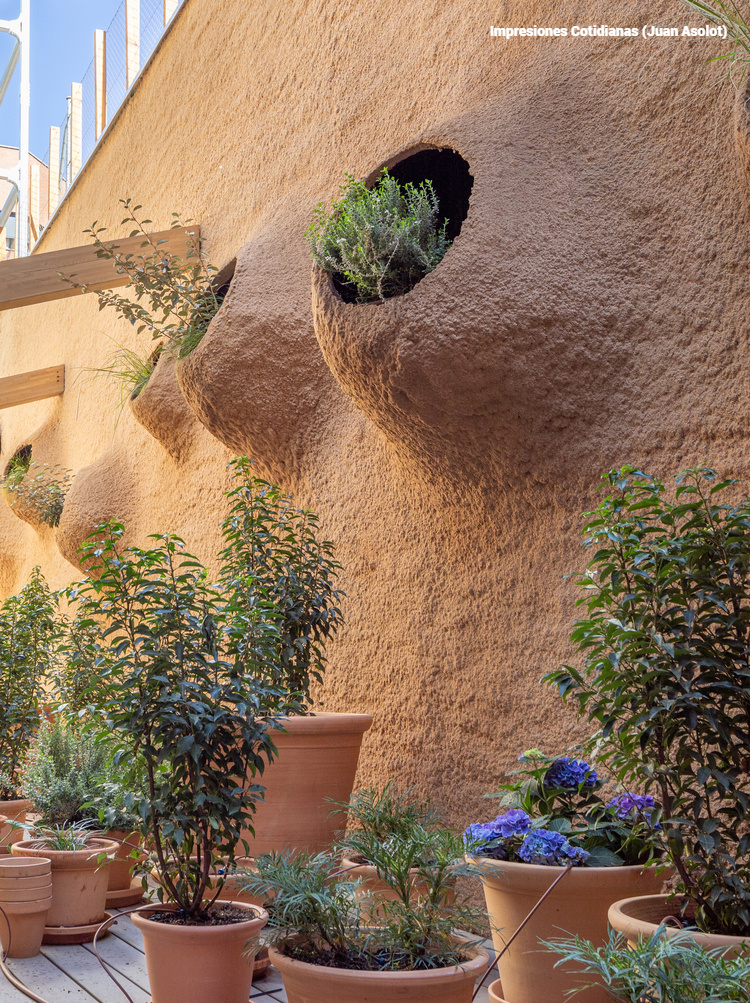
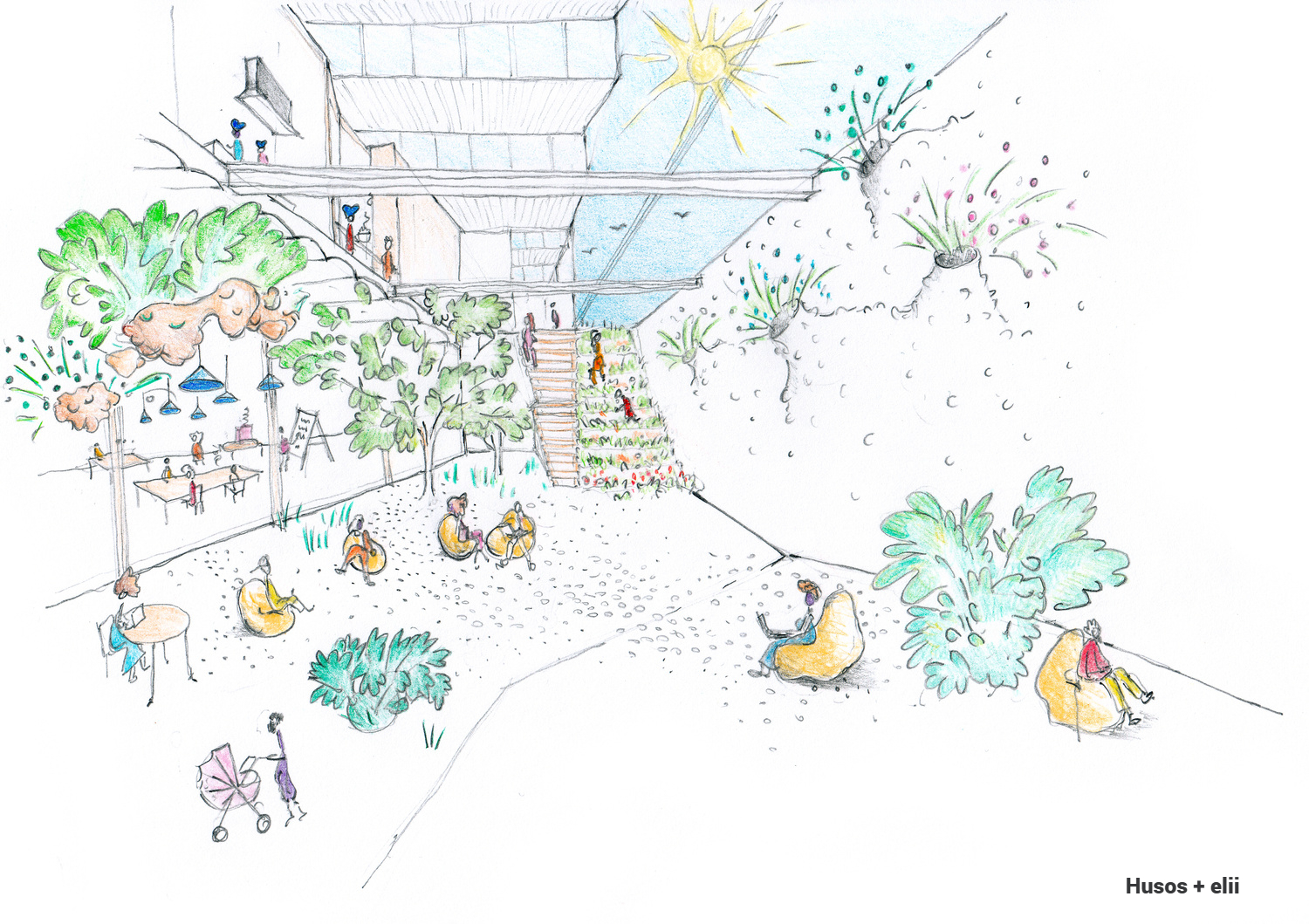
Various gardens are distributed between the inner courtyard, the roof, and the façade, which also have drinking fountains for birds. The entire architectural proposal by the Elii and Husos studios is aligned with the program of activities offered by the center in the Las Delicias neighborhood: coworking for companies, cultural exhibitions, and training courses.
This creates a strong link between biomaterials, especially wood and cork, the natural ecosystem, artists, chefs, and professionals in innovation and technology, which is evident in its more than 2,700 square meters, starting with the façade, designed as an invitation to the traditional Madrid balcony, which integrates exposed networks, sunshades, and planters.