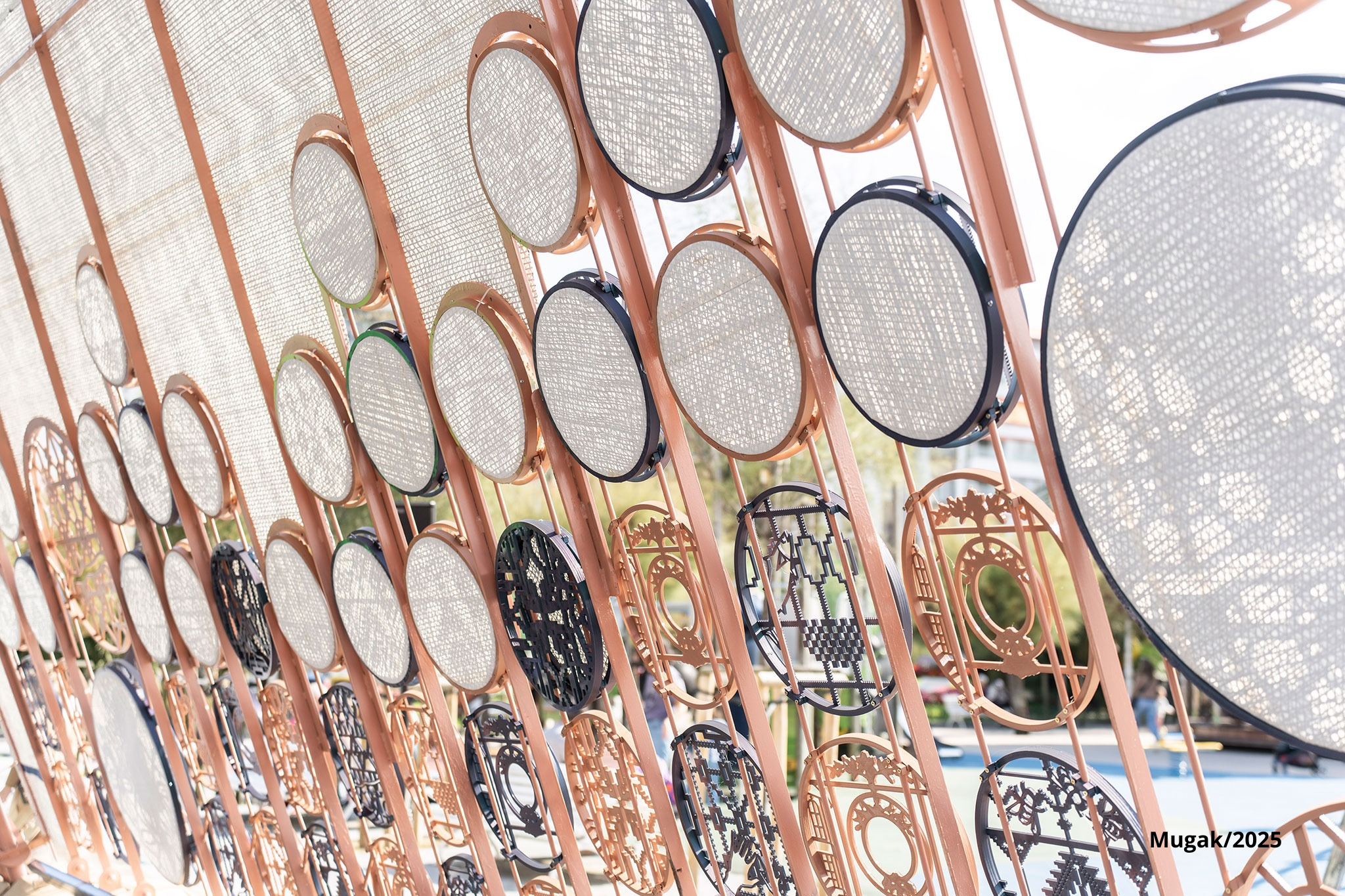
The ephemeral with a strong message of community and sustainability. In short, this has been the recent project by Izaskun Chinchilla Architects in the city of San Sebastián during the latest Euskadi Mugak/2025 International Architecture Biennial.
The intervention, an ephemeral pavilion called ‘Lightness and denunciation: embroidery as a feminine utopia’, has managed to channel a great act of community participation from the perspective of two important principles of the New Bauhaus: sustainability and craftsmanship.
This pavilion, designed as a light, open, and adaptable space, embodies a profound ecological reflection without requiring complex technical solutions. Likewise, the materials that give it shape are the result of conscious decisions, including recycled boat sails and plastics recovered from the sea that make up the pavilion’s “skin.”
At the same time, it serves as a reminder that circularity and ecological transition are not a fad, but tangible and necessary practices that articulate memory, landscape, and community.
In this sense, the project is in line with the sustainable practices that are already commonplace in the architecture studio, which has developed everything from porticos built with recycled bicycles to spaces that function with entirely reused materials, thus proposing circularity as a language and raw material.
Craftsmanship as architecture and activism
Izaskun Chinchilla’s proposal also focuses on an element that has always been there but has rarely taken center stage: traditional craftsmanship. Embroidery, sewing, and basketry, activities historically linked to the domestic sphere and therefore largely invisible, have acted as solid actors of structure, memory, and politics.
The narrative is embroidered, and from this perspective, this pavilion has turned each thread into a symbol of co-creation and safeguarding of intangible cultural heritage. In short, it is an elevation of manual craftsmanship to a critical tool that vindicates traditional knowledge and local idiosyncrasies, an area in which community participation fosters truly effective change.
To embed all these objectives, the pavilion also hosted embroidery workshops, public debates, and screenings, as well as, of course, spontaneous encounters between visitors to Alderdi Eder Park, which served as an active public space.