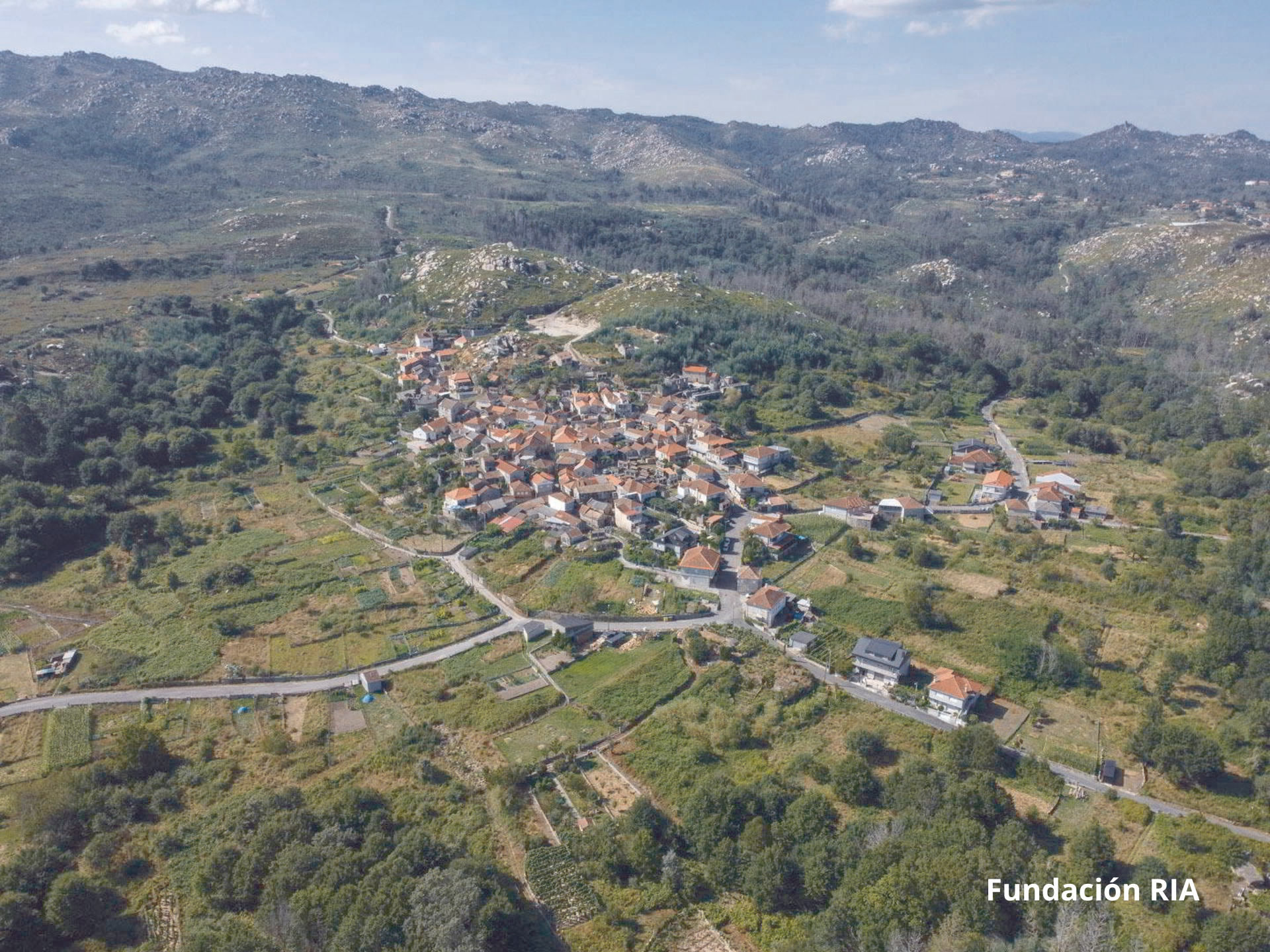
The village of Muimenta, in the municipality of Carballeda de Avia in the province of Ourense, has been awarded the 2026 La Casa de la Arquitectura Prize in the Public Action category, a recognition granted by the Ministry of Housing and Urban Agenda at an event held last May, which honors an innovative approach to understanding architecture as a tool for social transformation, territorial planning, and the revitalization of rural areas.
This award recognizes the revitalization strategy jointly promoted by the public administration and a nonprofit organization—specifically, the Xunta de Galicia, the Carballeda de Avia City Council, and the RIA Foundation. This initiative, which began in 2020, has transformed this small Galician village into a model for preserving this way of life, as well as for territorial regeneration and citizen participation, directly aligning it with the values of the New European Bauhaus.
Beyond recognizing a specific project, the jury has honored a long-term initiative that demonstrates how coordination among government agencies, technical expertise, community participation, and urban planning can work together to address today’s major challenges in rural areas—such as depopulation, an aging population, the risk of wildfires, and the need to create new opportunities for economic activity and well-being.
A comprehensive model for revitalizing rural areas
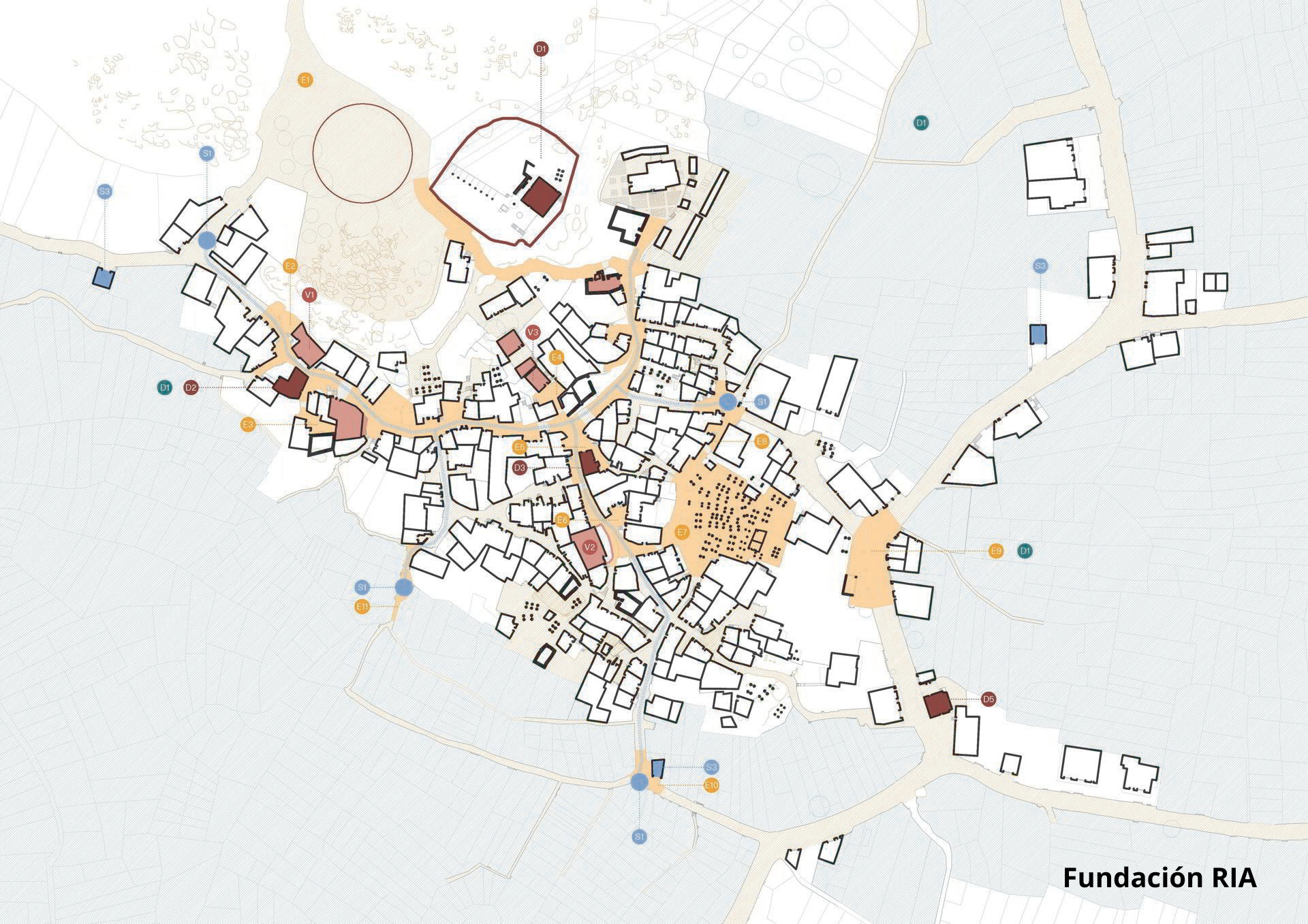
The strategy is based on an assessment that analyzes Muimenta’s needs from a broad perspective. Building on that work—which integrated the area into AGADER’s (Galician Agency for Rural Development) “Model Villages” program, a legislative initiative focused on revitalizing communities at risk of abandonment—a series of interconnected actions were defined that aim to:
- restore public spaces,
- rehabilitate the built heritage,
- facilitate access to housing,
- promote new services, and
- create opportunities to retain the population.
In these initiatives, architecture, economic development, public policy, and citizen participation advance in a coordinated manner, highlighting an approach that has enabled the village to become, in recent years, a laboratory for territorial innovation where new ways of living, working, and entrepreneurship in rural areas are being tested.
What are the key initiatives?
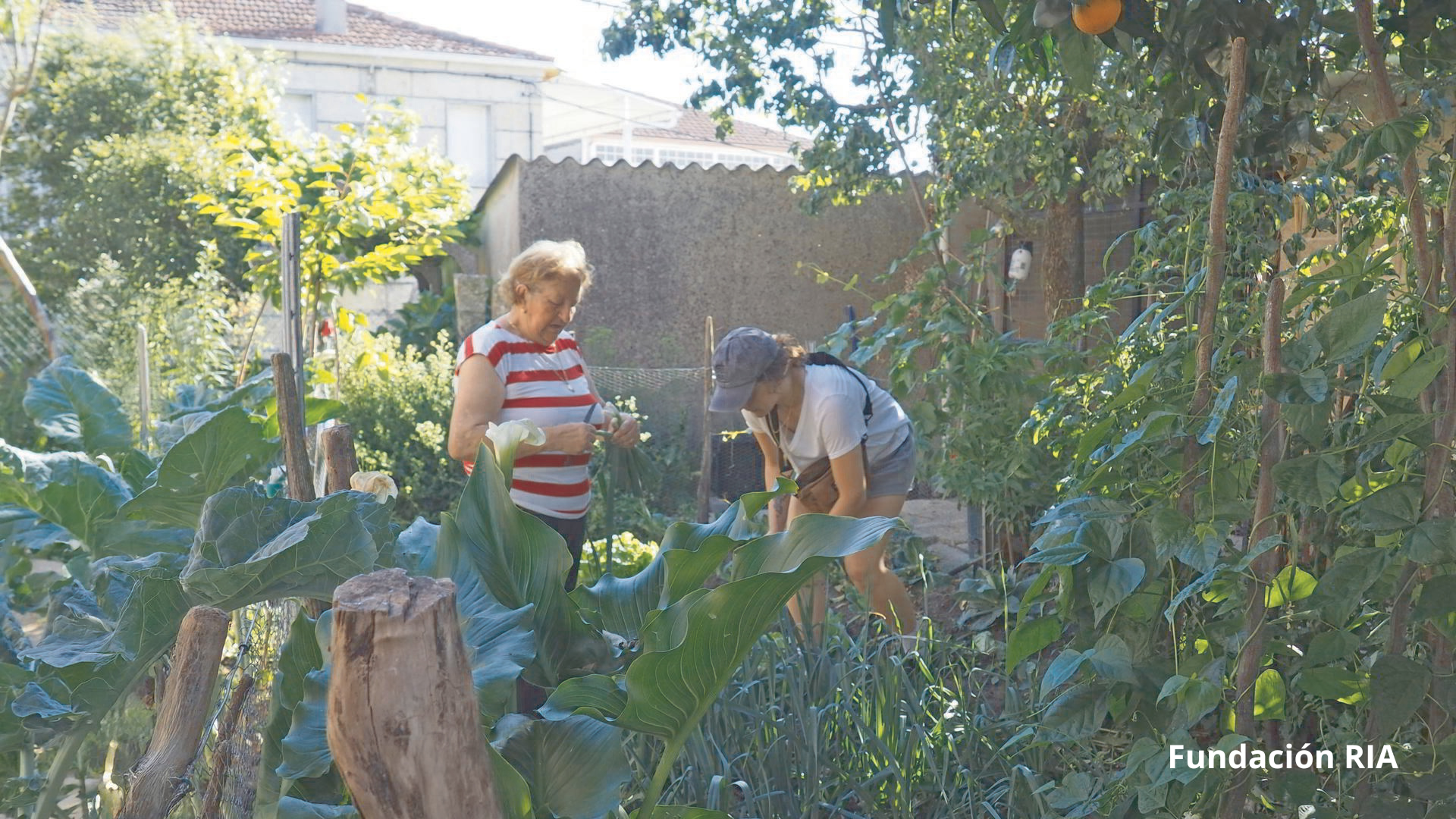
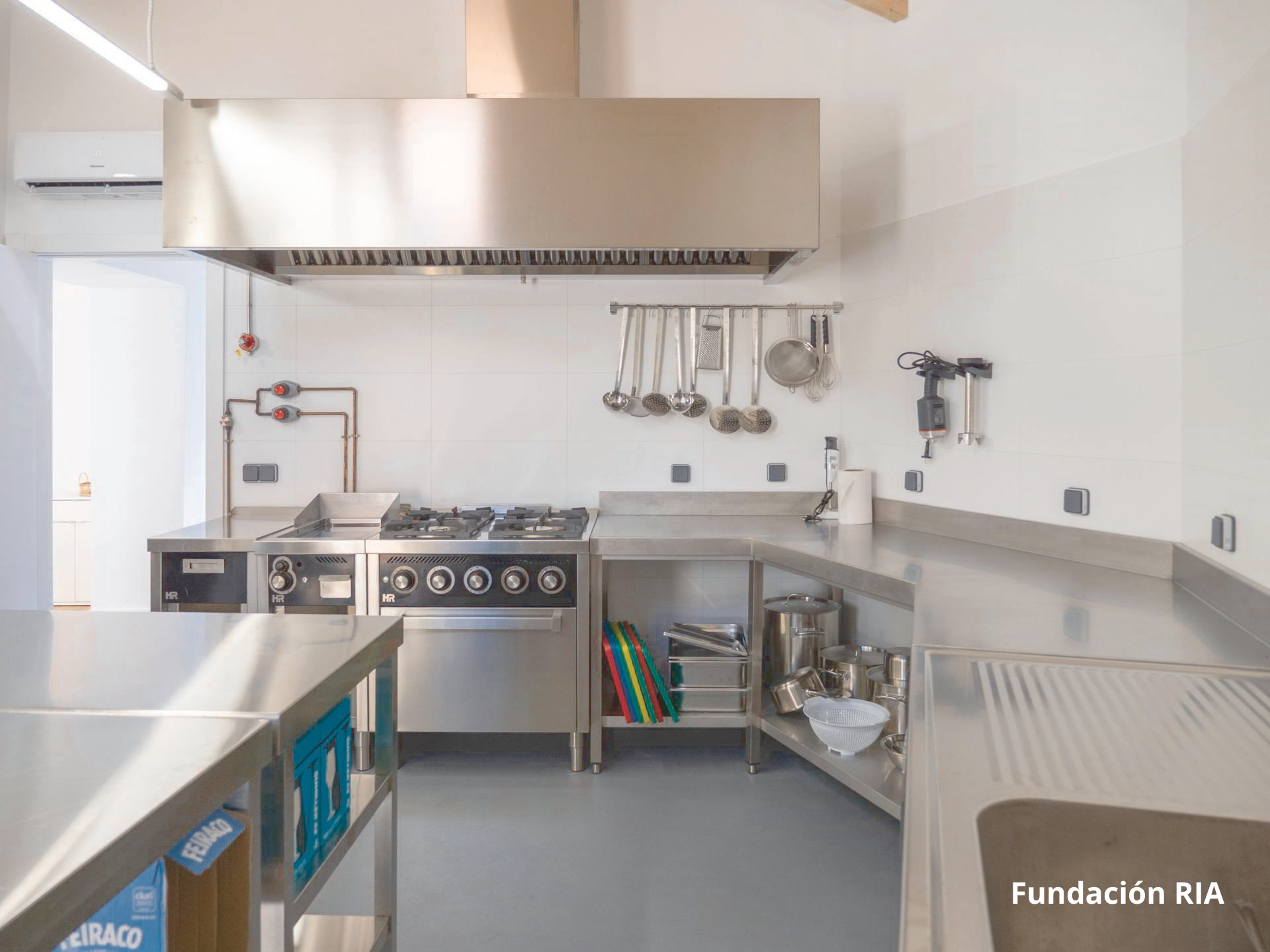
Among the actions carried out, we can highlight the renovation of the Plaza del Palco, which has restored one of the main gathering and social spaces for local residents. In addition to this project, a community kitchen with an attached dining hall was created, designed to serve both the elderly and as a venue for neighborhood gatherings and activities related to agricultural production and local cuisine. These activities are supported by the organic garden, which also hosts fire prevention programs.
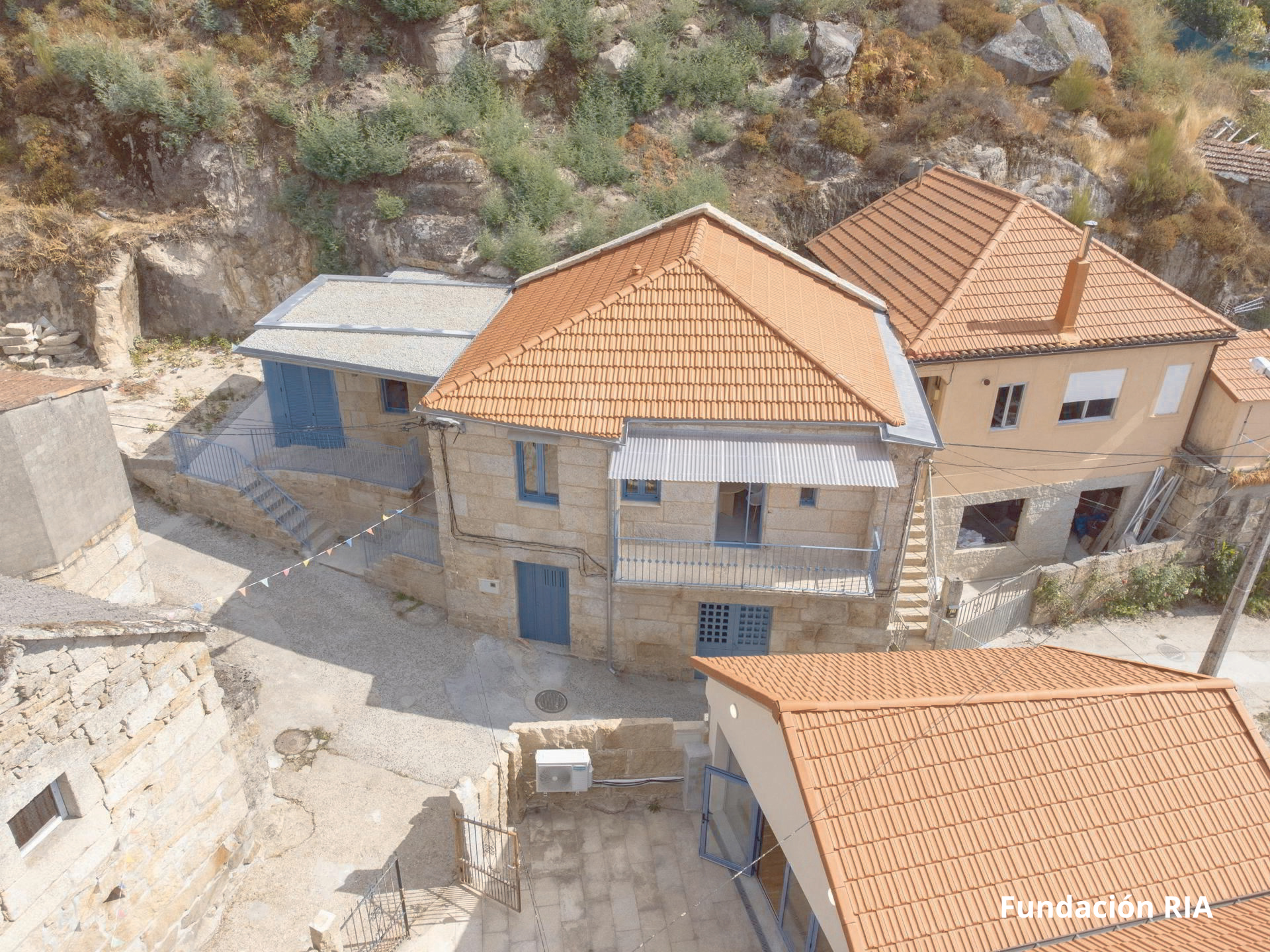
Furthermore, efforts have been made to restore the built heritage through the renovation of a residence designated for public housing, which aims to facilitate the temporary arrival of new residents and professionals interested in starting businesses. Thanks to a proposal by PLP Atelier with regional funding, the concept of “rural coliving” is being introduced as a tool to attract residents and generate new social and economic dynamics.
We also cannot fail to mention one of the most iconic elements of the RIA Foundation’s strategy in Muimenta: its new community center and coworking space, which was designed to be housed in a former, dilapidated home damaged by the fires that ravaged the entire autonomous community of Galicia in 2017. Its design, by Daniel Magide and the firm Based Architecture, was selected through a public architecture competition organized by the Carballeda de Avia City Council, coordinated by the RIA Foundation, and supported by the Official College of Architects of Galicia and the MOP Foundation, which promotes art and creativity in A Coruña.
The building is conceived as a flexible facility capable of responding to the community’s changing needs. It houses workshops, citizen participation activities, and conferences. In short, we could consider it a metaphor for what is happening throughout the municipality, which aims to grow, attract new residents and visitors, and generate greater well-being and quality of life for its population, sustained by opportunities for innovation and development.