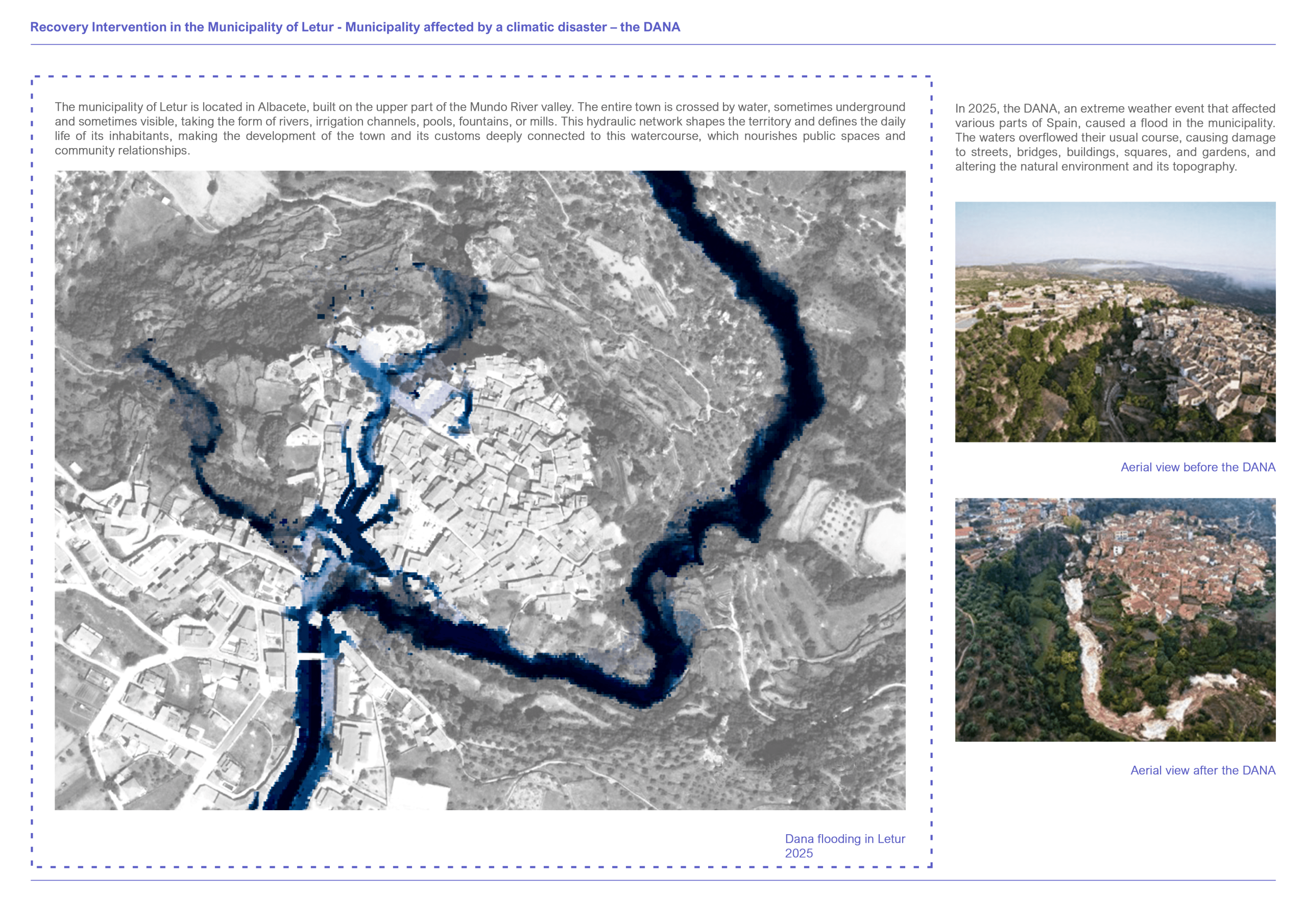
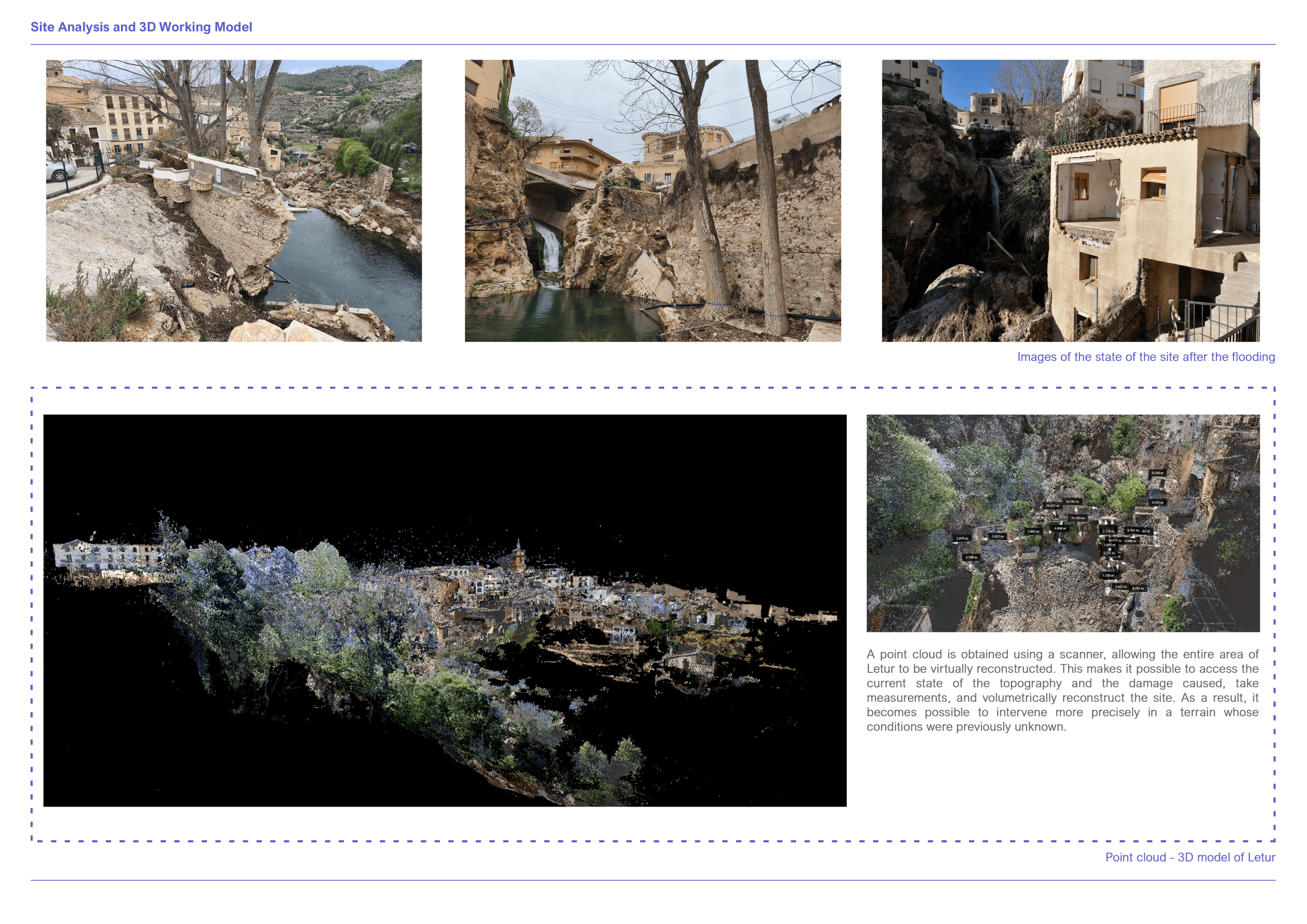
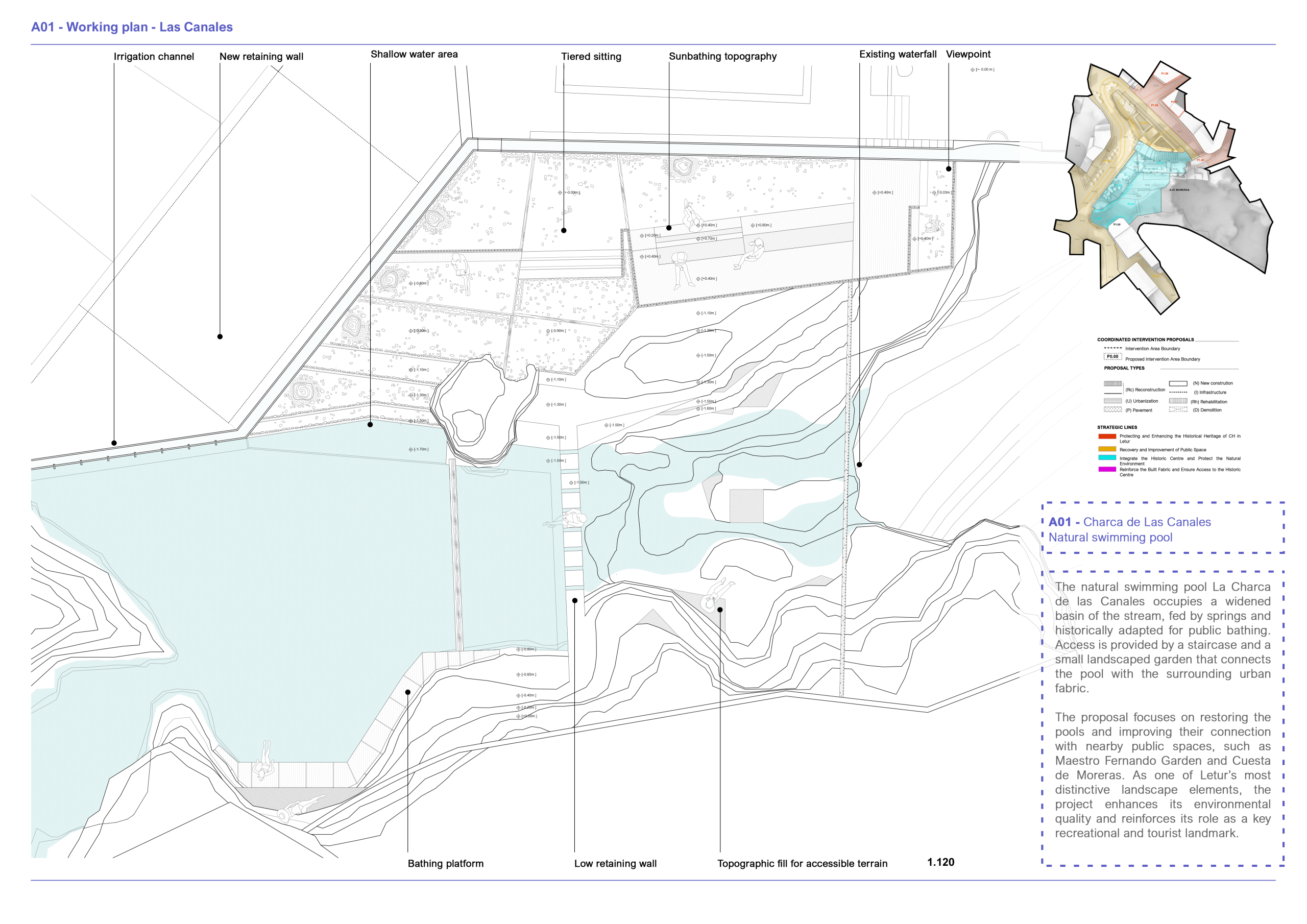
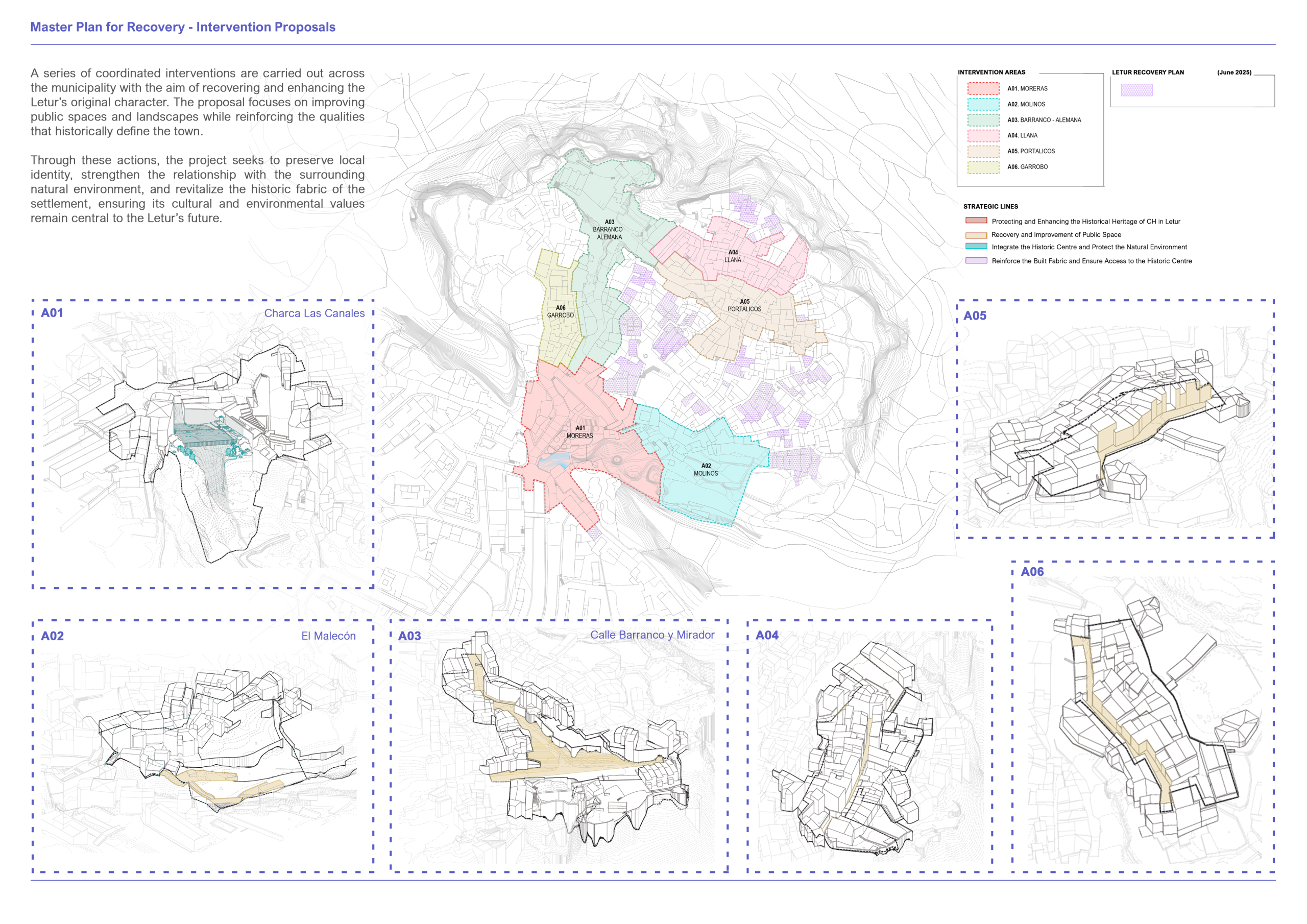
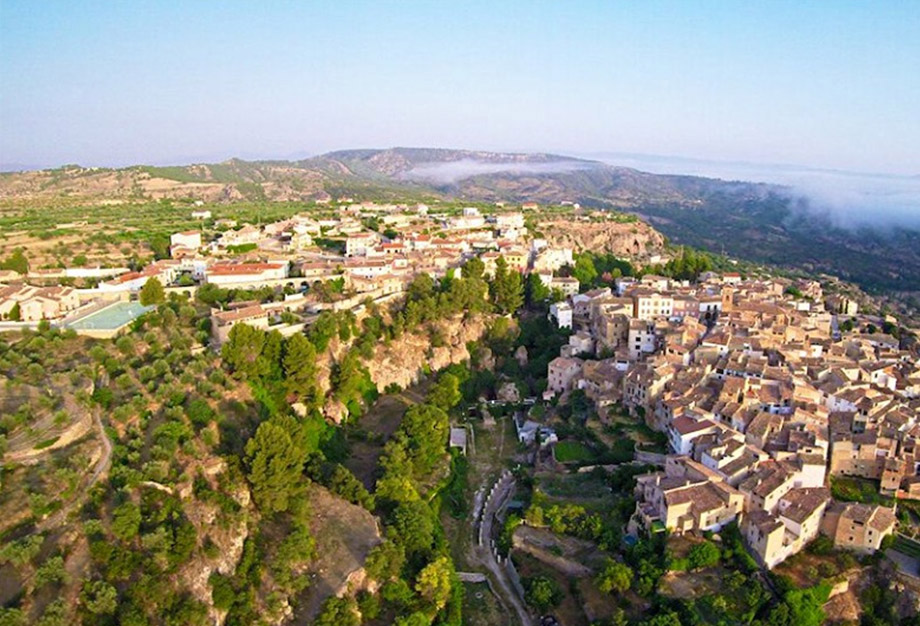
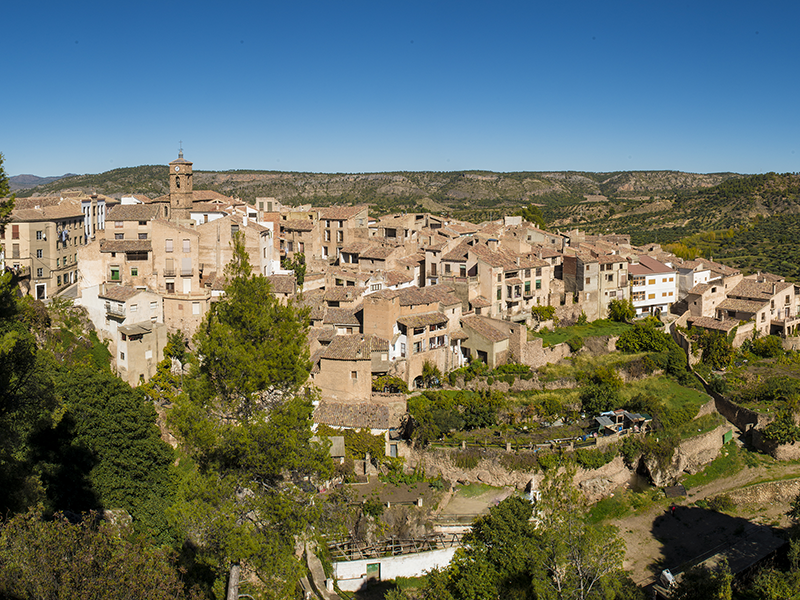
The municipality of Letur, in the province of Albacete, has been selected as one of the winners of the NEB Boost for Small Municipalities 2026 for its Master Plan for the recovery of the historic town centre, drawn up by architects Javier Ruiz and Álvaro Ardura and incorporated into its Reconstruction Agenda, as a clear example of a response to and support for the reconstruction of municipalities affected by the DANA floods. The initiative combines the protection of cultural heritage, urban regeneration, citizen participation and climate resilience. The project is supported by the Ministry of Housing and Urban Agenda, whose collaboration helps promote strategic planning and the recovery of the region following the severe damage caused by the DANA floods in October 2024.
This is an example of governance and planning. It is the result of institutional cooperation between Letur Town Council, the Ministry of Housing and Urban Agenda and the Regional Government of Castilla-La Mancha, with the collaboration of the Provincial Council of Albacete and the Sierra del Segura Local Action Group, reflecting the potential of the Spanish Urban Agenda to drive changes that have a real impact on people’s lives. It is a new tool designed to promote spatial and urban planning at regional level, integrating the needs and aspirations of different municipalities to facilitate the development of sustainable planning models that, if pursued individually, would require a much greater technical and financial effort.
These circumstances have made it possible to rethink the future of the municipality from a comprehensive perspective. The Master Plan for the Recovery of the Historic Centre of Letur proposes that reconstruction should not simply mean repairing the damage, but also improving safety, liveability, well-being and the sustainability of the urban environment. This recognition by the European Commission, which awards the municipality €30,000, as well as a communications and dissemination support package, highlights the value of a proposal that connects the recovery of the built heritage with climate change adaptation and improvements in residents’ quality of life.
The plan includes the restoration of affected buildings and public spaces, the recovery of historic water systems, improved accessibility and the protection of the cultural landscape. These measures aim to preserve Letur’s architectural identity and keep its tangible and intangible heritage alive, integrating it into an urban regeneration strategy tailored to the characteristics of the area. It also recognises the importance of incorporating climate risks into planning in order to reduce the municipality’s vulnerability to potential future extreme weather events.
As highlighted in the values of the New European Bauhaus, citizen participation is another key pillar of the project. Through spaces for dialogue and active listening, as well as the involvement of neighbourhood and cultural associations and vulnerable groups, the needs and experiences of those who live in and enjoy the municipality on a daily basis are taken into account. This approach makes it possible to link physical recovery with the social dimension of the area, supporting the continuity of community life, the retention of the resident population and the revival of local economic activity. The aim is to ensure that the historic town centre remains an inhabited, accessible space connected to the identityand distinctive character of its residents.
In this process, the MIVAU plays a significant role through its support for Letur’s strategic planning. In July 2025, the Ministry signed an agreement worth €126,583 to develop its Reconstruction Agenda, as part of the Spanish Government’s Immediate Response, Reconstruction and Revitalisation Plan, under which the Ministry has allocated a total of €10,000,000 to affected municipalities, strengthening the planning tools needed to address recovery from a sustainability and long-term development perspective. This collaboration makes it possible to link reconstruction measures with broader objectives relating to climate resilience, urban regeneration and improved living conditions.
Institutional cooperation continued in September 2026 with the Urban Planning and Territory Dialogues held in Letur, a meeting focused on reviewing progress in reconstruction and promoting a new Urban and Rural Development Agenda, or ADUR. This initiative aims to develop a pilot project to help simplify regional regulations while improving the capacity to respond to climate change and its adverse effects. Strategic planning and coordination between administrations are essential to ensure that recovery goes beyond responding to the emergency and helps anticipate risks.
Innovative solutions at the local level
Recognition under the NEB Boost for Small Municipalities call highlights the potential of small municipalities to develop innovative solutions that integrate sustainability, social inclusion and the quality of the built environment. In line with the NEB principles, the Letur project demonstrates how protecting historic heritage can become a tool for strengthening social cohesion, preserving the landscape and promoting more balanced territorial development. Its experience also highlights the importance of adapting solutions to the characteristics of each community and combining local knowledge with long-term planning instruments.
Letur’s recovery demonstrates how a disaster can become an opportunity to build a more sustainable and resilient future. The combination of heritage protection, climate adaptation, citizen participation and institutional cooperation makes it possible to approach reconstruction from a perspective that goes beyond repairing the damage.