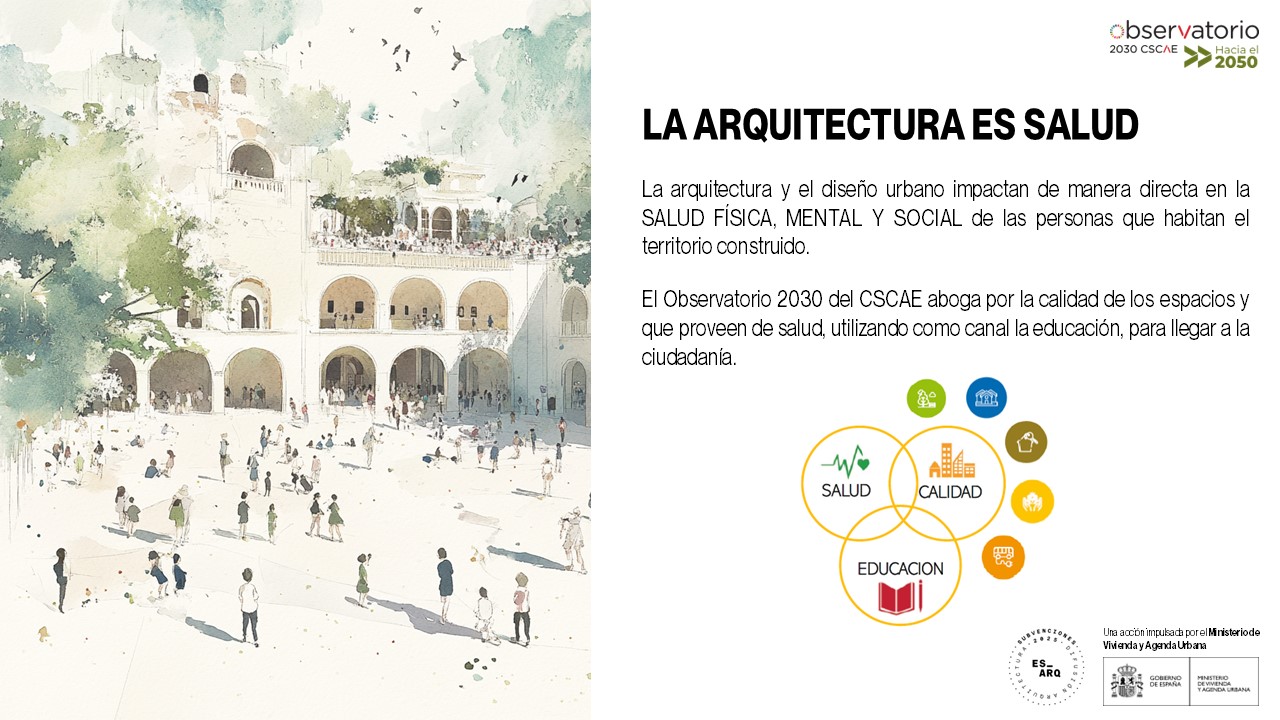
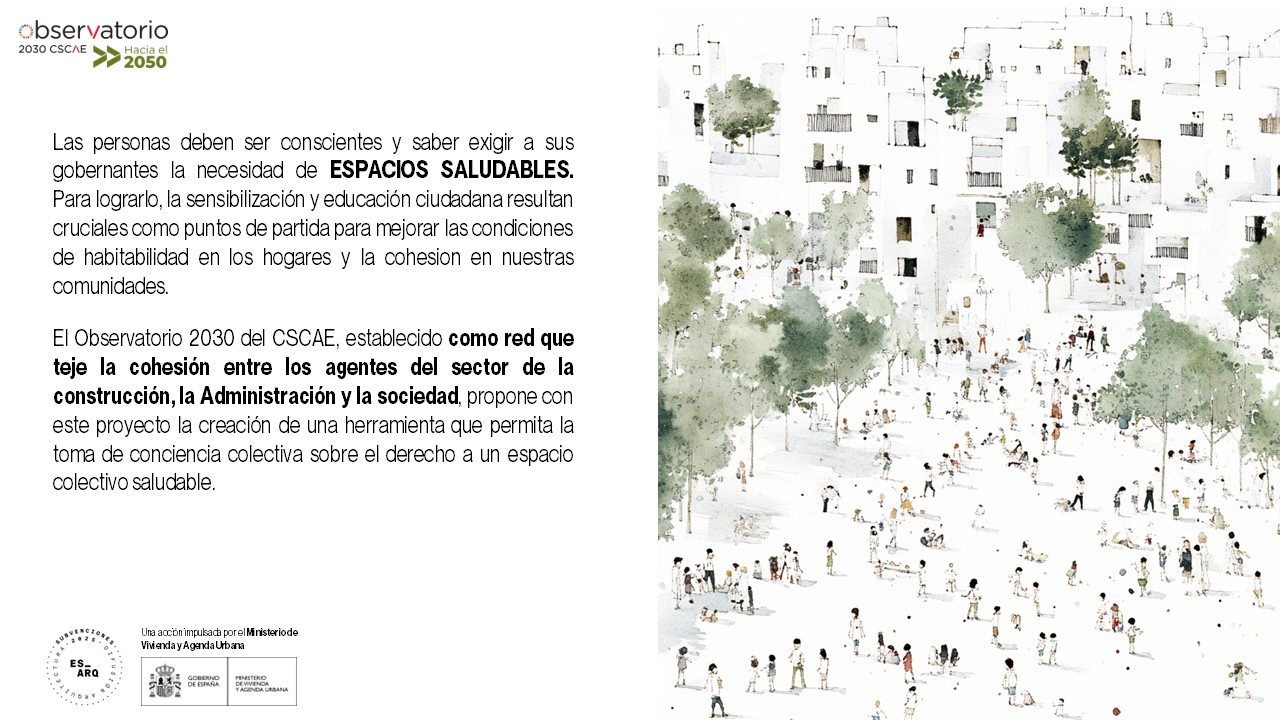
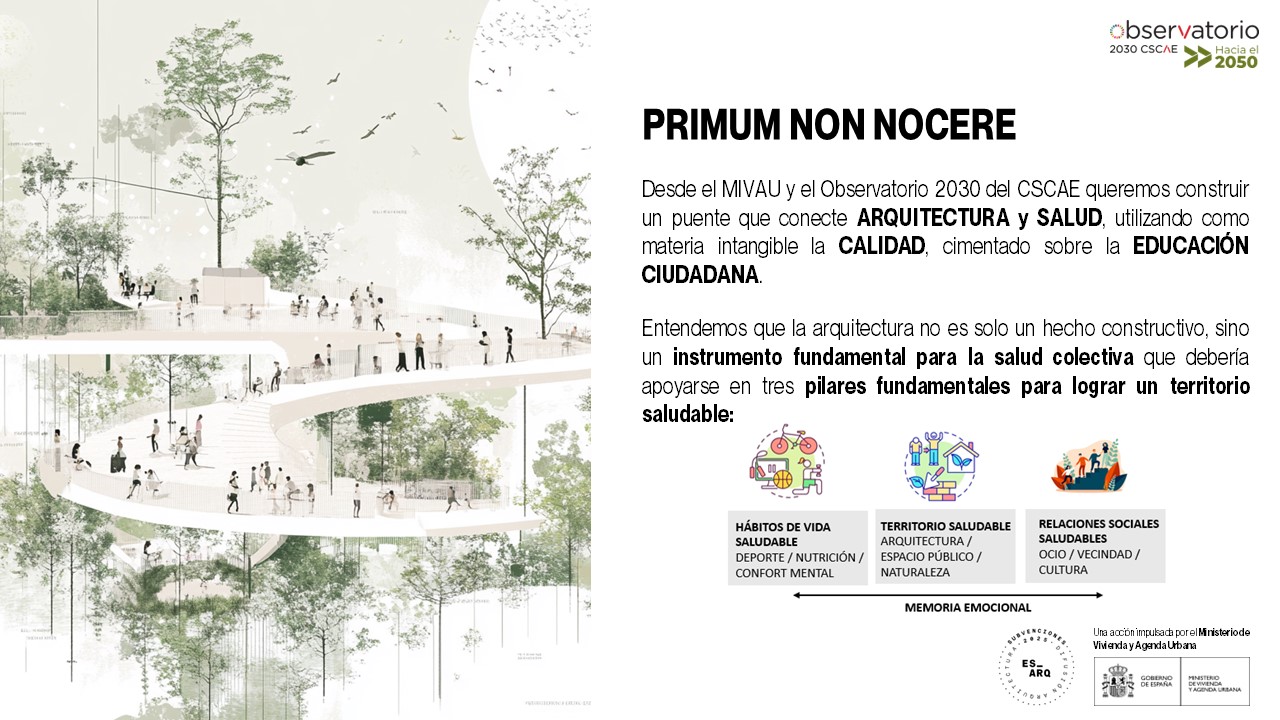
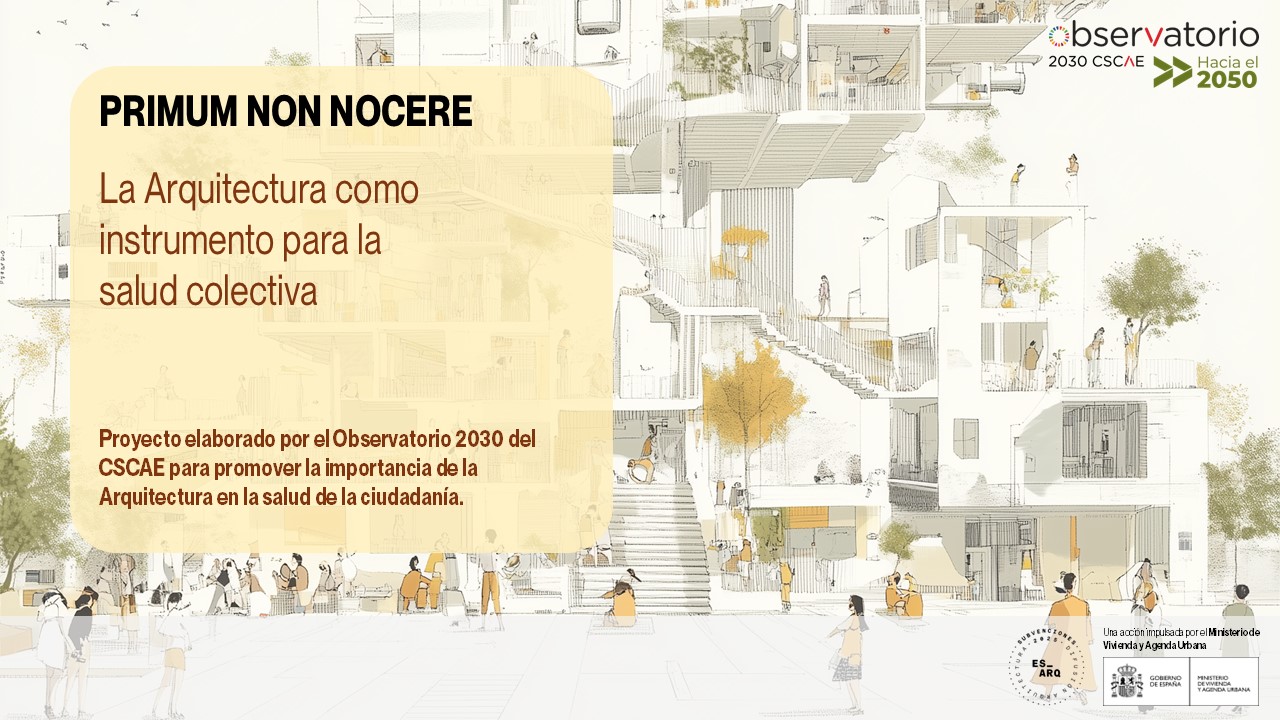
Architecture influences the way we live, interact with one another, and take care of our health. Based on this premise, the Primum non nocere project was launched by the 2030 Observatory of the Higher Council of Architects’ Associations of Spain (CSCAE). The project aims to raise public awareness of the relationship between the built environment and well-being, positioning architectural design as an essential tool for improving quality of life.
The initiative, funded by the Ministry of Housing and Urban Agenda as part of the 2024 call for grants to promote architecture, proposes a paradigm shift: moving away from viewing architecture solely as a technical or aesthetic discipline to recognizing it as an element that has a direct impact on people’s physical, mental, and social health. Moreover, its very name reflects this. This Latin expression means “first, do no harm,” one of the ethical principles traditionally associated with medicine.
Building on this idea, the CSCAE invites reflection on architecture’s responsibility in creating healthy environments. It refers to the quality of housing, the availability of accessible public spaces, the presence of green spaces, natural lighting, ventilation, and neighborhood design—aspects that influence mental health, comfort, mobility, social relationships, and resilience in the face of climate change.
Furthermore, this vision aligns with the World Health Organization’s (WHO) definition of health, which views well-being as a state of physical, mental, and social well-being, and identifies the built environment as one of the factors that most influence people’s quality of life.
Bringing Architecture Closer to the Public
One of the main objectives of this project is to enhance society’s architectural literacy. Thus, it aims to help the public understand how decisions regarding the design of homes, schools, streets, plazas, and cities in general directly impact daily life, and to enable them to appreciate the importance of quality architecture as a public good.
To this end, the initiative is developing informational materials and educational tools aimed at both students and the general public. Among the planned actions are:
- the development of a teaching unit that will become part of the educational and pedagogical resources of La Casa de la Arquitectura,
- its pilot implementation at a secondary school, and
- the development of activities with neighborhood associations.
The CSCAE also plans to adapt its content to different regional contexts—from large cities to small towns and rural areas—with the goal of demonstrating that the relationship between architecture and health affects all inhabited environments equally.
This new initiative aligns with others already underway. One such example is the “Habitar salud” series, organized in collaboration with the Medical Association (OMC), which began last March and brings together architects, urban planners, doctors, researchers, and public administrators to discuss how the built environment influences people’s health. Also noteworthy is the LCA exhibition titled “Bienestar en la ciudad” (Well-being in the City), curated by architect Izaskun Chinchilla.
This line of work currently underway reinforces the need for dialogue on the relationship between architecture and health. It is argued that good architecture not only improves the functionality of buildings but also promotes social inclusion, reduces inequalities, fosters healthy lifestyles, and helps build communities that are more resilient to environmental and demographic challenges. Furthermore, in line with the European Commission’s NEB values, there is a commitment to effectively disseminating these principles and encouraging active citizen participation.