This June, the European Commission launched an innovative tool designed to facilitate efforts to develop affordable and eco-friendly housing solutions. That is why this new handbook or catalog is intended for public administrations, architecture and urban planning professionals, and developers.
The document brings together 21 residential projects from various European countries, selected for their ability to address some of the sector’s main challenges: access to housing, adaptation to climate change, citizen participation, and the regeneration of neighborhoods and communities.
That is why this catalog was created to identify methodologies and solutions that can be adapted to different local contexts. Each initiative is described in terms of the social, economic, and environmental conditions of its implementation context, as well as the strategies employed to improve the affordability and resilience of the housing.
This proposal, which aims to facilitate the transfer of knowledge among European cities and regions—particularly those considered “success stories”—complements other initiatives undertaken by the European Commission that reflect its concern about the current housing situation, as well as the need to decarbonize the building stock. All of these initiatives complement the European Affordable Housing Plan, published on December 16.
Social, Environmental, and Economic Focus
The projects have been organized according to a core need within the context in which they are being implemented. These needs have been categorized as Economic, Social, and Environmental. For example, in the case of SHAPE EU—an international initiative whose second phase is currently underway in the Basque Country—the goal is to address the limited capacity of municipalities through funding, horizontal governance models, and other tools that facilitate the development of affordable housing.
As for drOp, which is also in the implementation phase in the Basque Country through December of this year, the goal is to empower the most vulnerable neighborhoods and promote co-designed solutions for their public spaces, thereby increasing a sense of belonging, in accordance with the principles of the New European Bauhaus initiative.
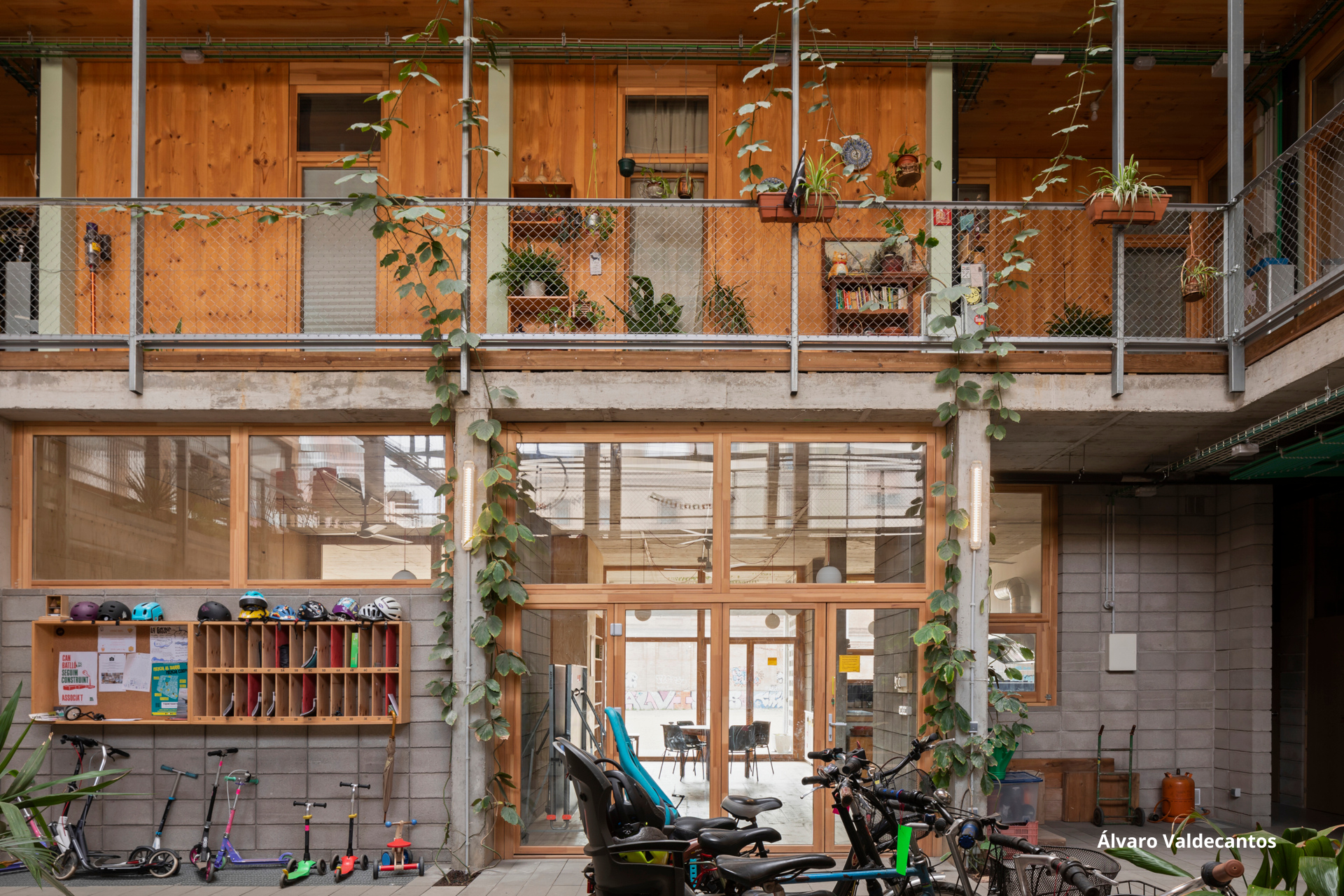
La Borda, in Barcelona, also fits into this category; it addresses housing speculation and explores a cooperative model. Furthermore, it explores ways to achieve an efficient ecological transition, which has enabled it to achieve very low energy consumption to date.
Finally, in the social context category, we can also mention SHARE in Madrid, which seeks to foster intergenerational collaboration through a housing model that benefits both young and older residents, as well as to rehabilitate valuable, underutilized infrastructure.