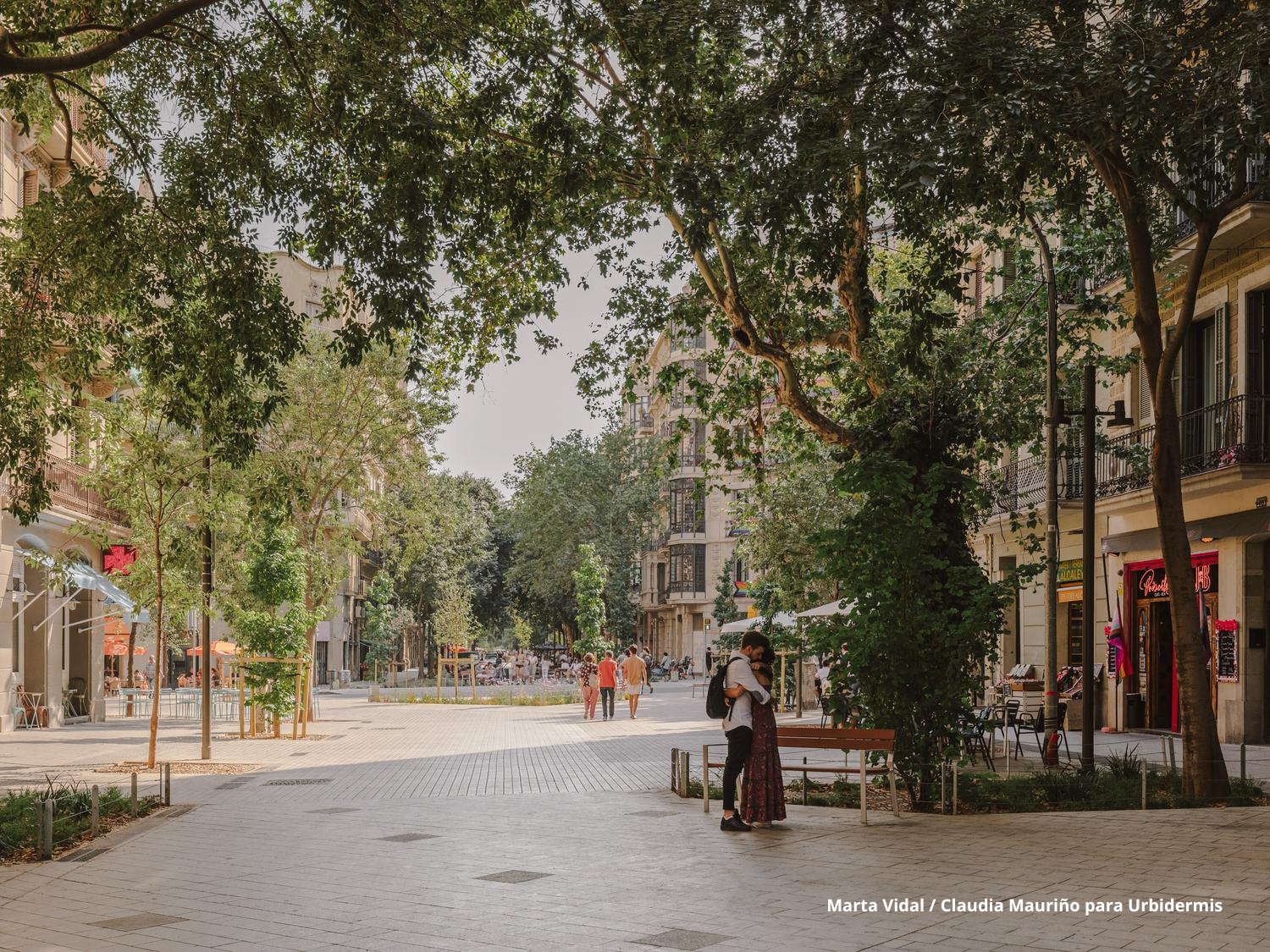
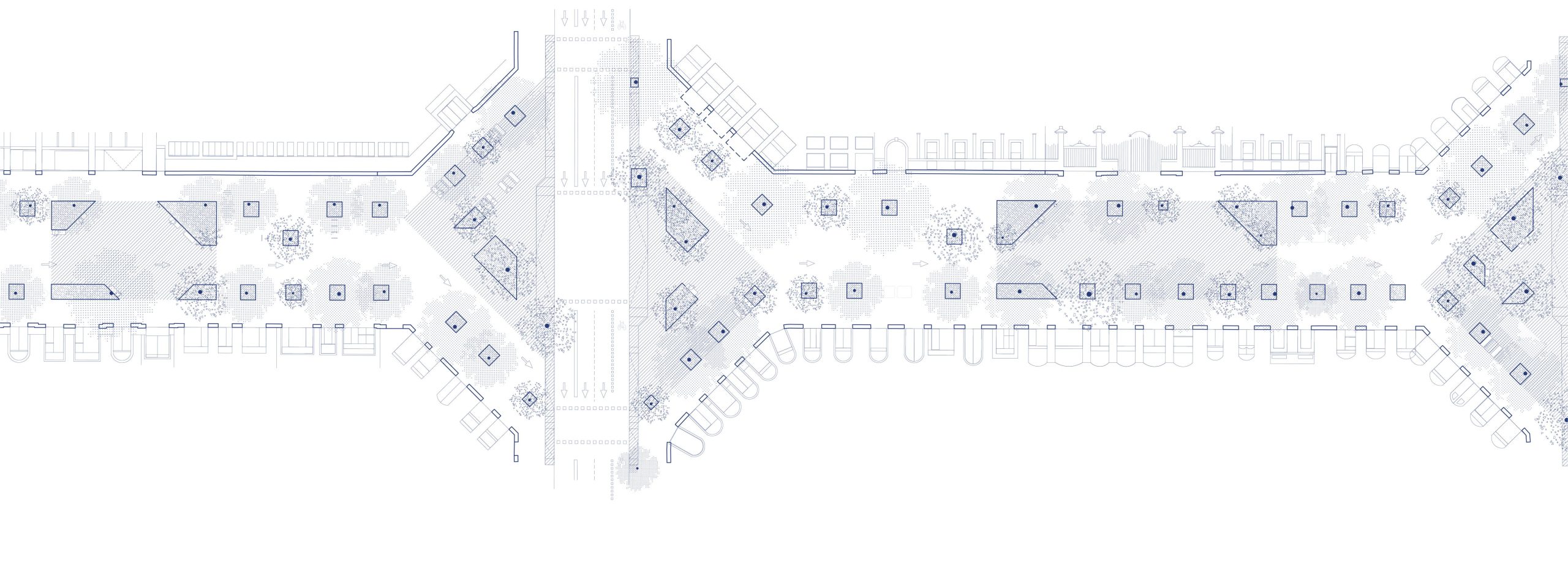
The Eix Verd de Consell de Cent project, developed by CIERTO ESTUDIO in collaboration with BP67 Palomeras Arquitectes as part of the Superilles Barcelona program—and winner of the 2025 New European Bauhaus Awards—is one of the most representative urban interventions in the recent transformation of public space in the Catalan capital.
The proposal is based on a reimagining of the street as a place for communal living, which enhances citizens’ leisure time, well-being, and health. Thus, the project redefines Barcelona’s Consell de Cent Street as a green axis where people, nature, and sustainability take center stage.
To this end, it proposes a unified platform that prioritizes pedestrian movement and incorporates a sequence of spaces for lingering and gathering. It also increases the presence of vegetation and improves environmental conditions through solutions that promote soil permeability, sustainable water management, and increased urban biodiversity.
This design also incorporates small plazas distributed along the route, new street furniture, and universal accessibility criteria, transforming the street into an infrastructure that is both environmental and social—capable of fostering community life and safeguarding local businesses.
For all these reasons, the project was recognized at the latest edition of the arquia/próxima awards, where it won one of the two top prizes awarded by the Arquia Foundation to emerging talent in Spanish and Portuguese architecture. The jury highlighted not only its architectural quality but also its ability to demonstrate how collaboration between public administrations and young architecture firms can generate projects with significant social impact, capable of addressing the current challenges of built environments from a sustainable perspective.
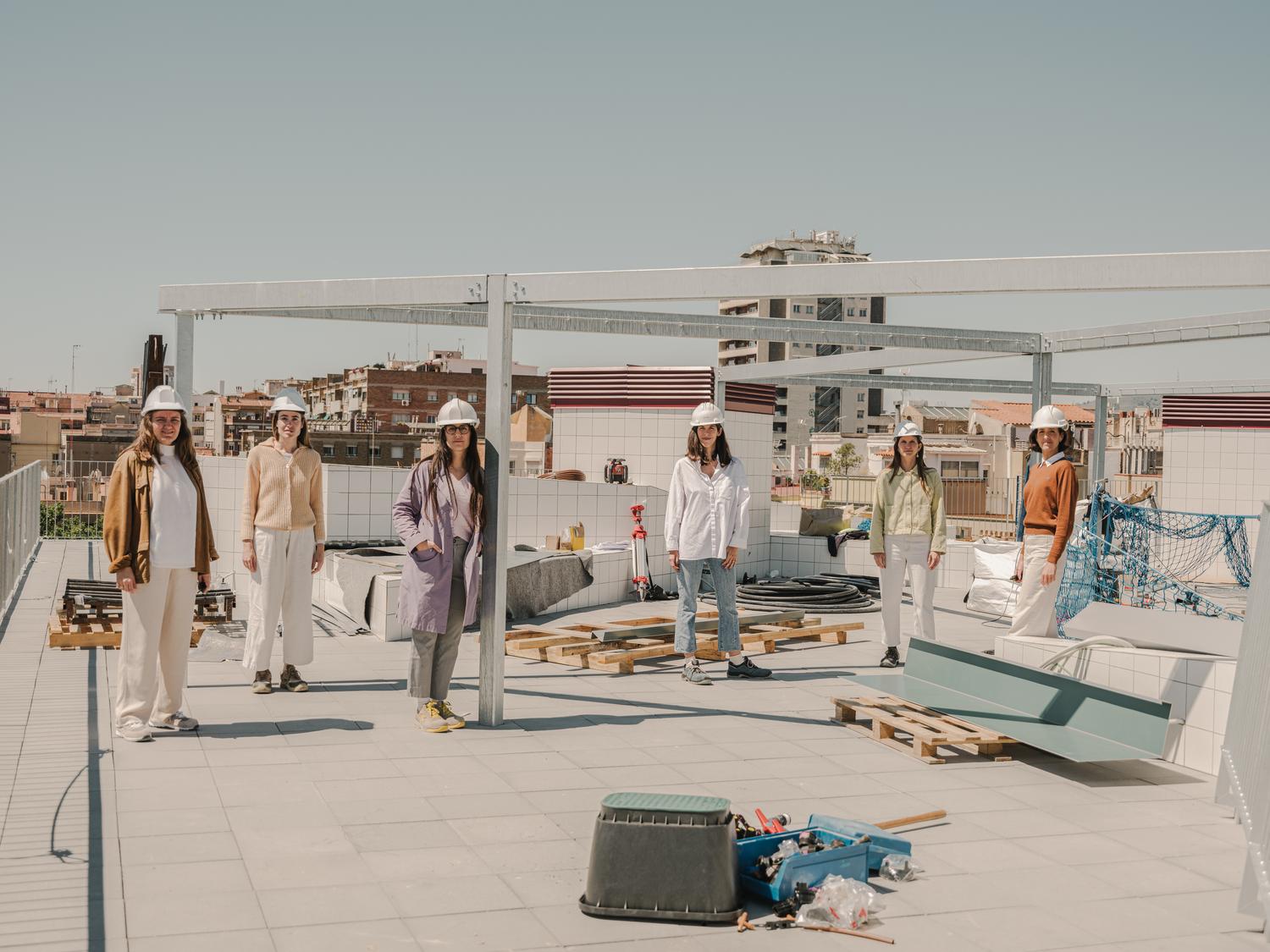
This project clearly reflects the NEB values, as well as the philosophy of CIERTO ESTUDIO, a collective of female architects founded in Barcelona in 2014 and composed of Marta Benedicto, Ivet Gasol, Carlota de Gispert, Anna Llonch, Lucía Millet, and Clara Vidal. They focus on experimentation, research, and design, positioning themselves at the intersection of architecture, urban planning, and culture.
In addition to co-creation tools, they pay special attention to social, environmental, and gender issues, viewing architectural design as a key element capable of transforming both spaces and the dynamics that unfold within them.
Their approach, which highlights architecture’s commitment and capacity to improve well-being and living conditions, has been recognized with the 2026 UIA Young Architects Award from the International Union of Architects, which was presented last June at a commemorative ceremony at the Sagrada Familia in Barcelona.
Proposals for Collective Housing
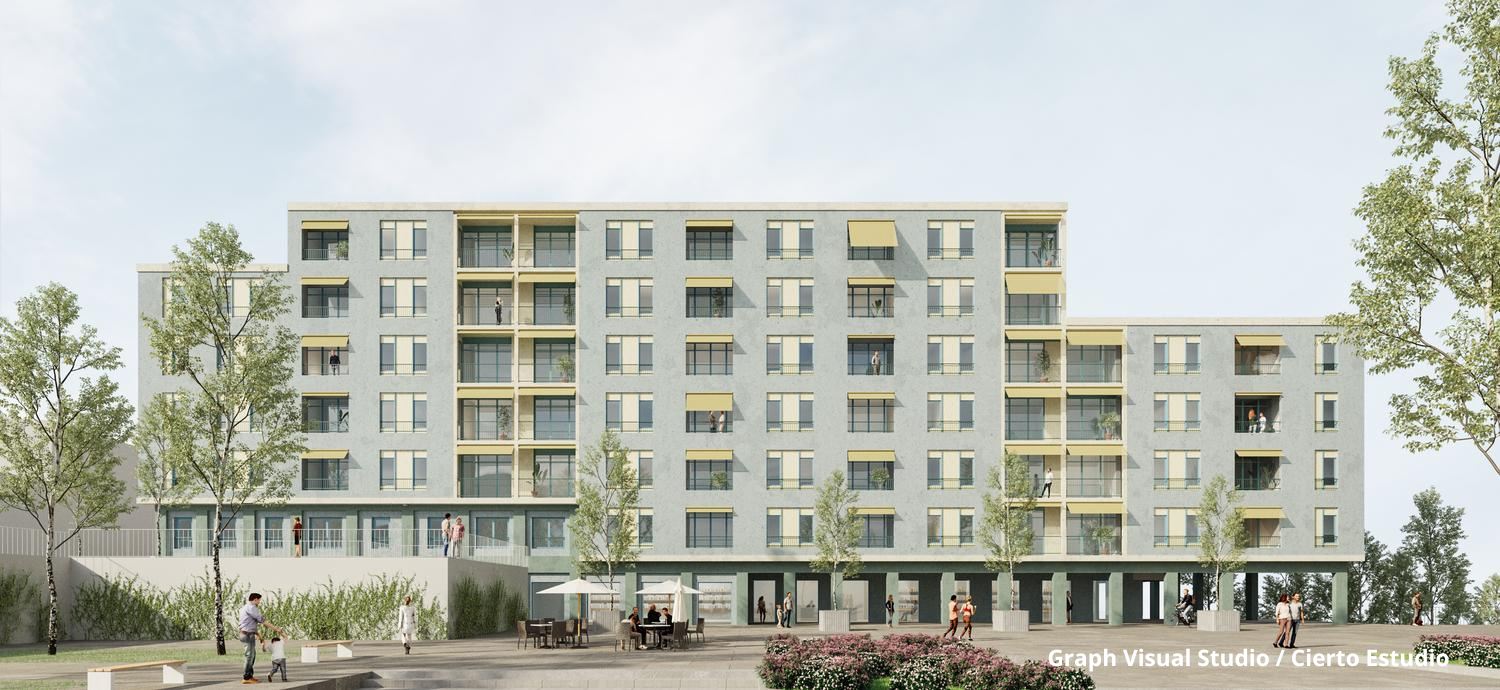
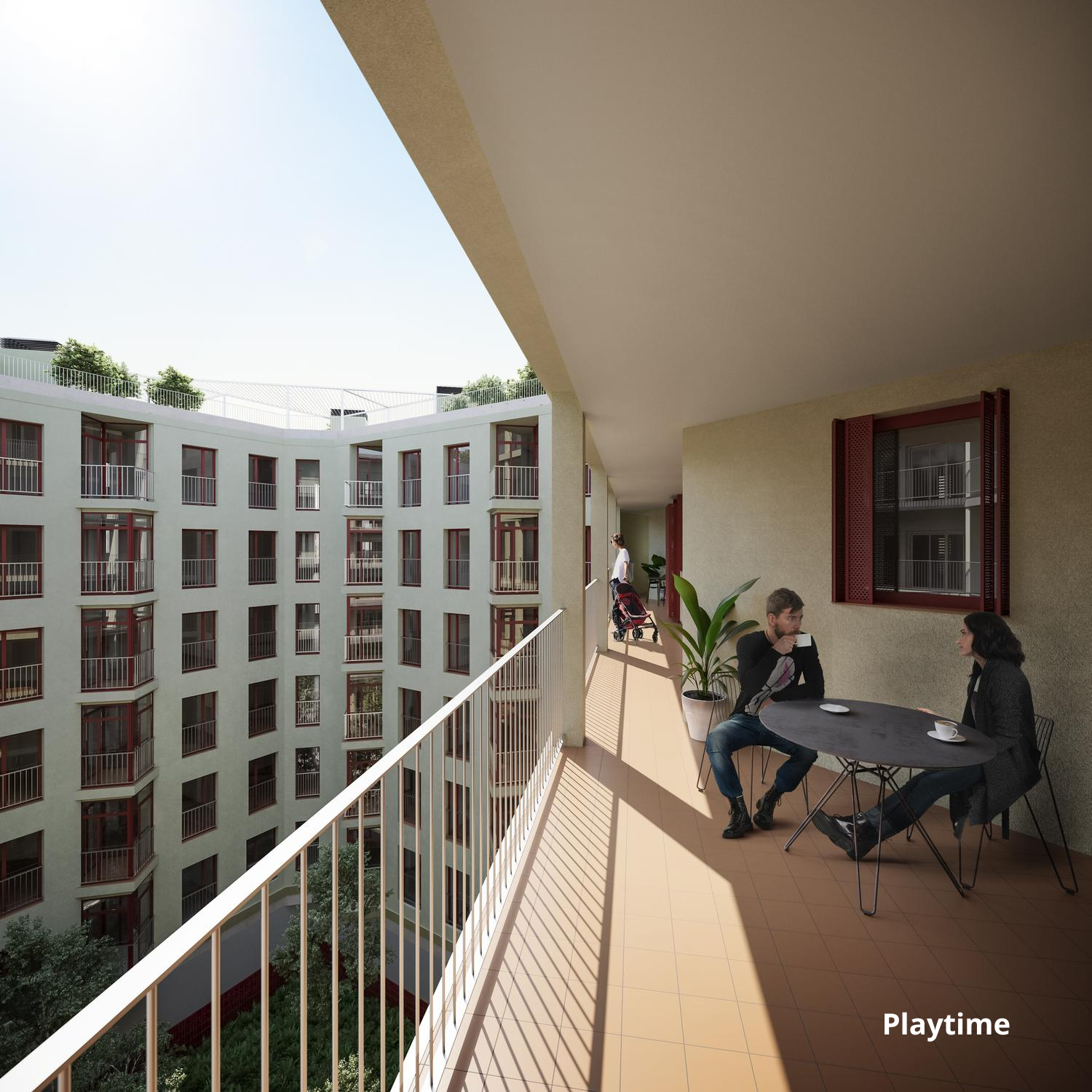
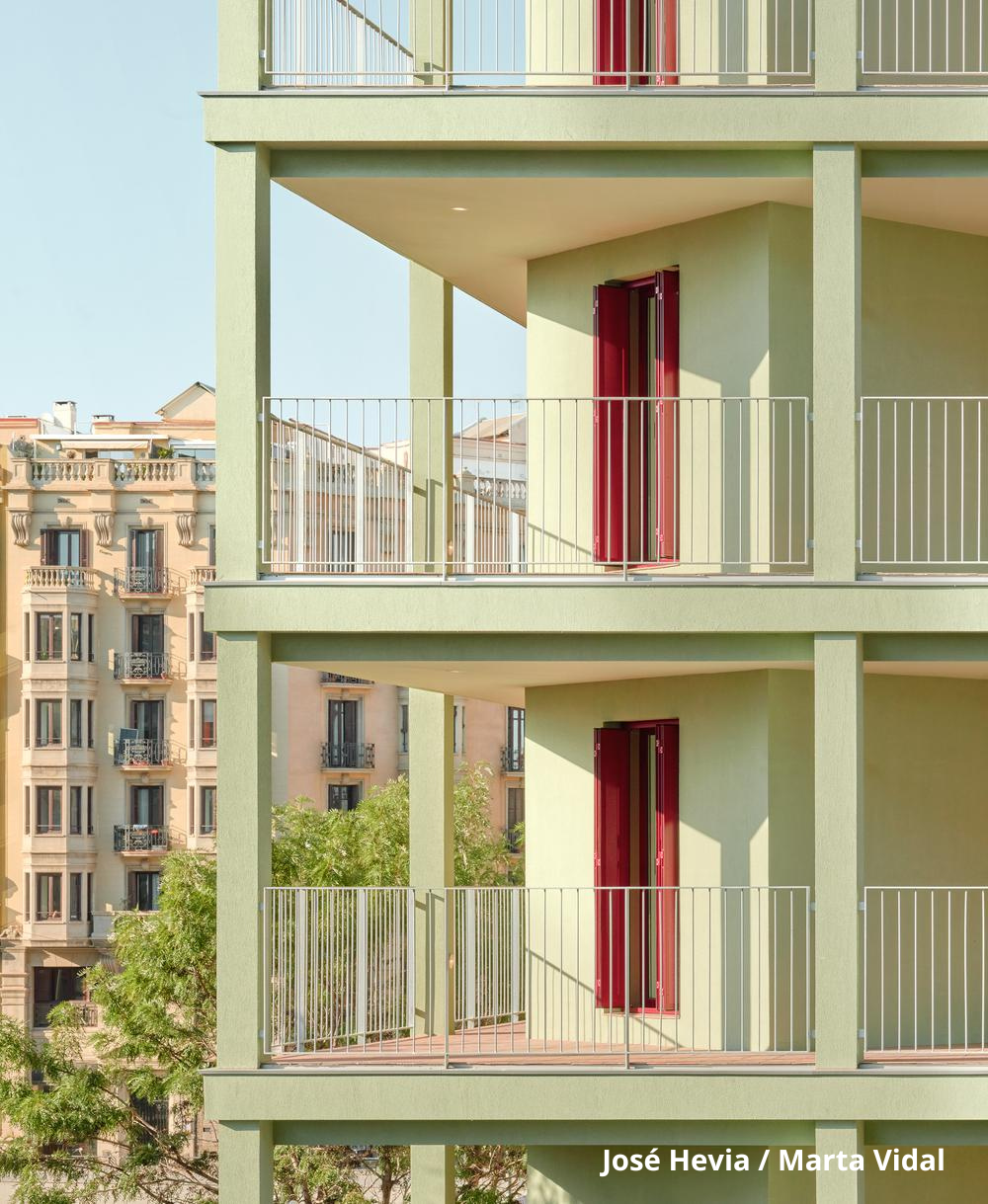
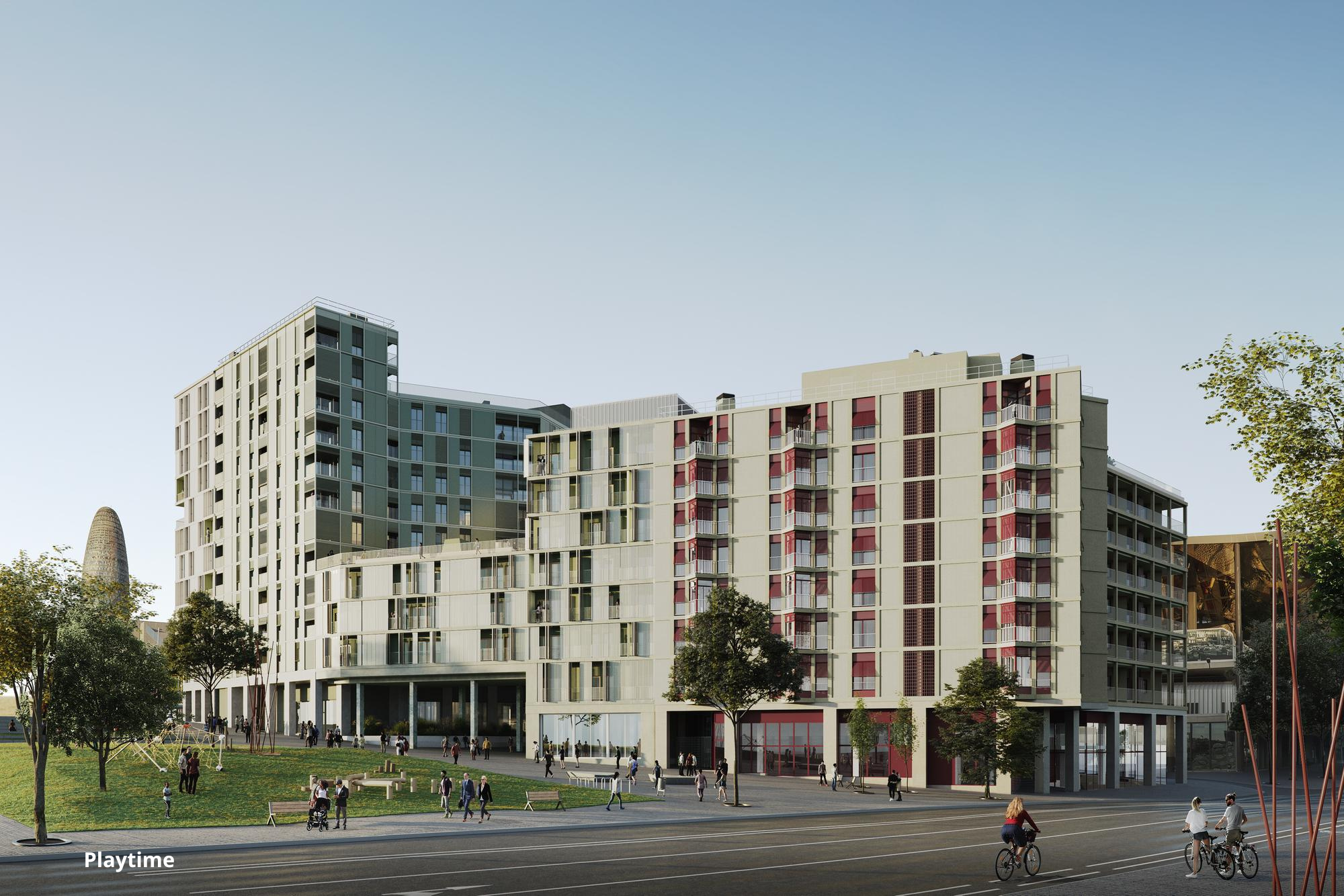
That is why this studio also takes a special interest in the development of new ways of living, including collective housing. We could highlight the Comunitat Habitacional or Illa Glòries Block A, a building with 51 social housing units in Barcelona.
The building, which is part of a complex of four and was designed in collaboration with Franc Llonch in 2025, features a wooden structure organized around a communal courtyard that connects the circulation spaces via walkways and culminates in a shared roof. It also stands out for its commitment to flexible domestic spaces. A similar approach is evident in another of their projects, called Kitch·room, a 67-unit public housing building also located in Barcelona.