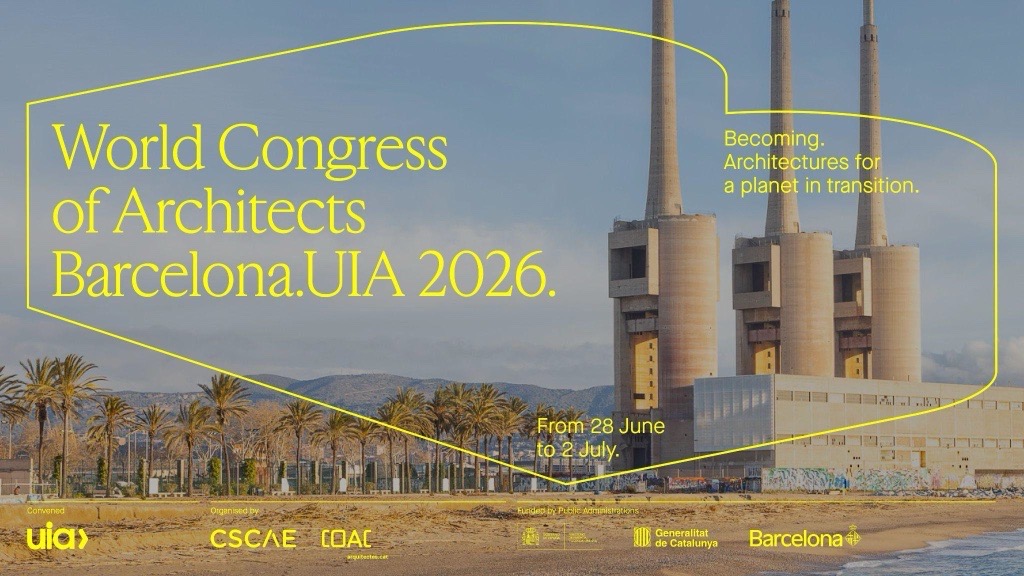
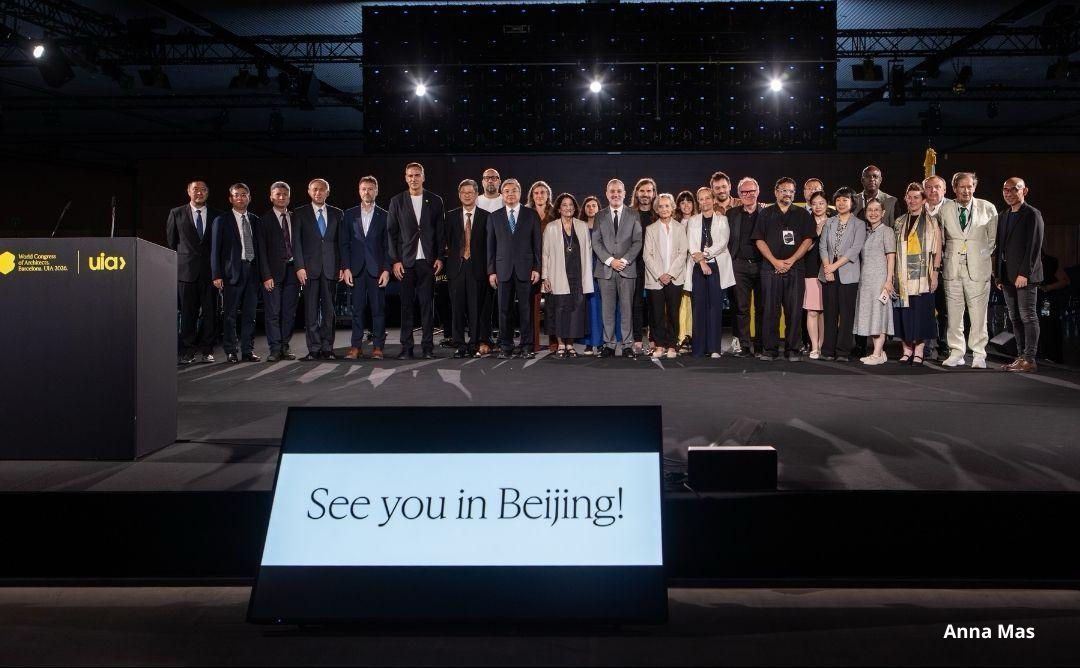
The 2026 UIA World Congress of Architects has concluded with the presentation of the Barcelona Declaration, which outlines the main conclusions of this international gathering and establishes a roadmap to strengthen architecture’s contribution to addressing social, environmental, and urban challenges.
The document is one of the main legacies of this event and highlights the role played by entities such as the Ministry of Housing and Urban Agenda (MIVAU) and the Higher Council of Architects’ Associations of Spain (CSCAE) in promoting a shared agenda focused on the quality of the built environment.
The congress, held under the theme “Becoming. Architectures for a Planet in Transition,” brought together more than 10,000 professionals from 130 countries and featured an extensive program of lectures, debates, and activities focused on housing, the ecological transition, innovation, urban transformation, and the future of the profession.
For this reason, the Barcelona Declaration synthesizes the reflections developed during these events and proposes six areas of action—time, matter, life, justice, scale, and meaning—as a framework to guide the collaborative work of professionals, public administrations, institutions, and organizations in the sector in the coming years.
In this way, it promotes a cross-cutting approach that takes into account inclusion, sustainability, and quality—the values of the New European Bauhaus initiative—and positions architecture as a tool in the service of collective well-being, as well as a means of addressing current challenges such as the climate emergency, access to housing, heritage conservation, and the transformation of cities.
Institutional Support
The document was presented during the conference’s closing ceremony by CSCAE President Marta Vall-llossera, who highlighted the collective nature of the declaration. The text emphasizes the need to promote architecture that contributes to improving quality of life, fosters environmental sustainability, and strengthens social cohesion, incorporating these principles into the design, planning, and management of the built environment.
The event was attended by Iñaqui Carnicero, Secretary General for Urban Agenda, Housing, and Architecture at the Ministry of Housing and Urban Agenda, as well as representatives from the Government of Catalonia, the Barcelona City Council, UNESCO, and the College of Architects of Catalonia, in addition to a delegation from Beijing, the host city of the next congress in 2029.
With the approval of this new roadmap, the 2026 UIA World Congress of Architects in Barcelona concludes by establishing a framework that aims to guide future initiatives in the fields of architecture and urban planning. In this context, MIVAU reaffirms its commitment to developing policies and actions that promote a higher-quality, more sustainable built environment adapted to the present and future needs of citizens.