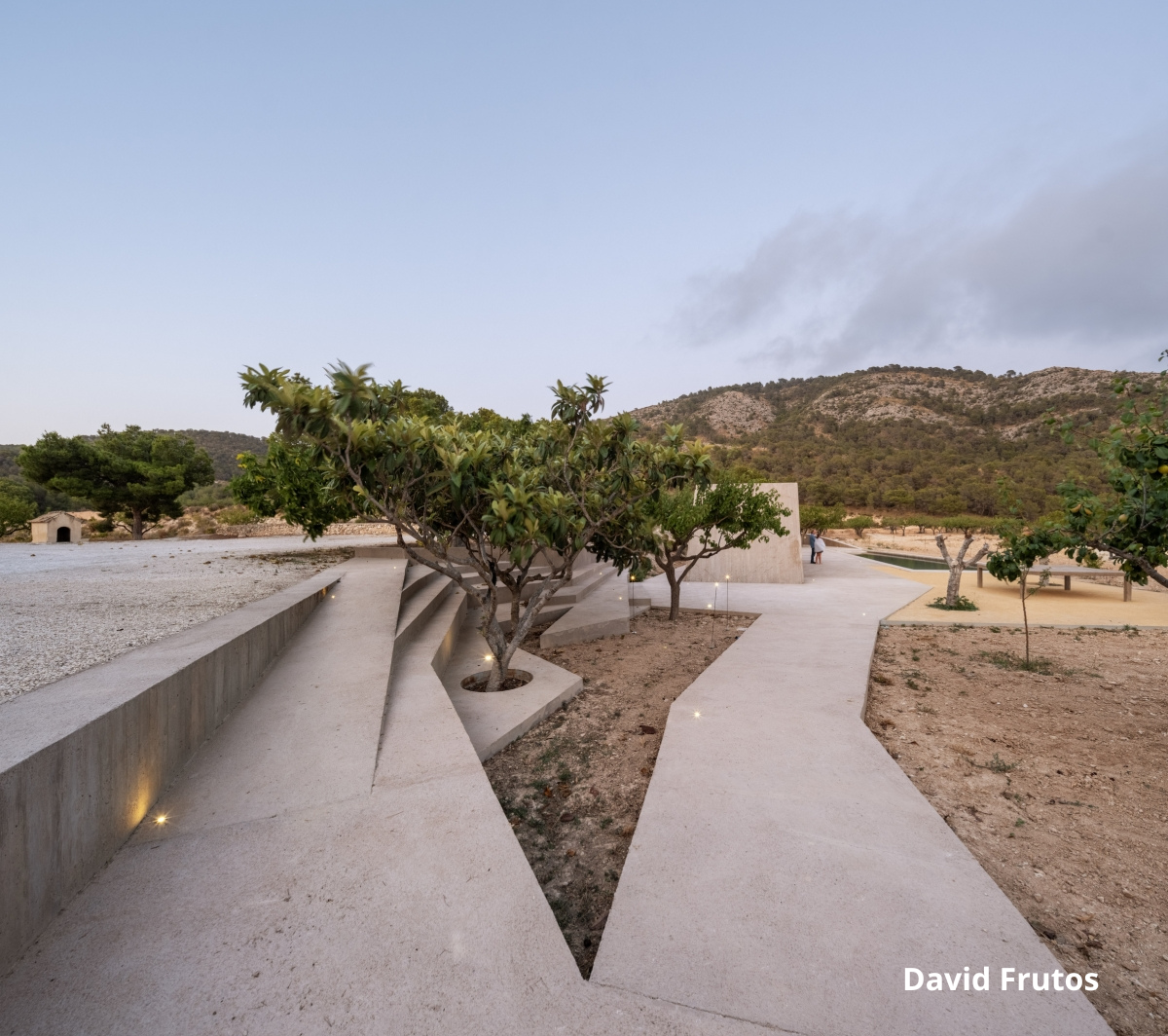
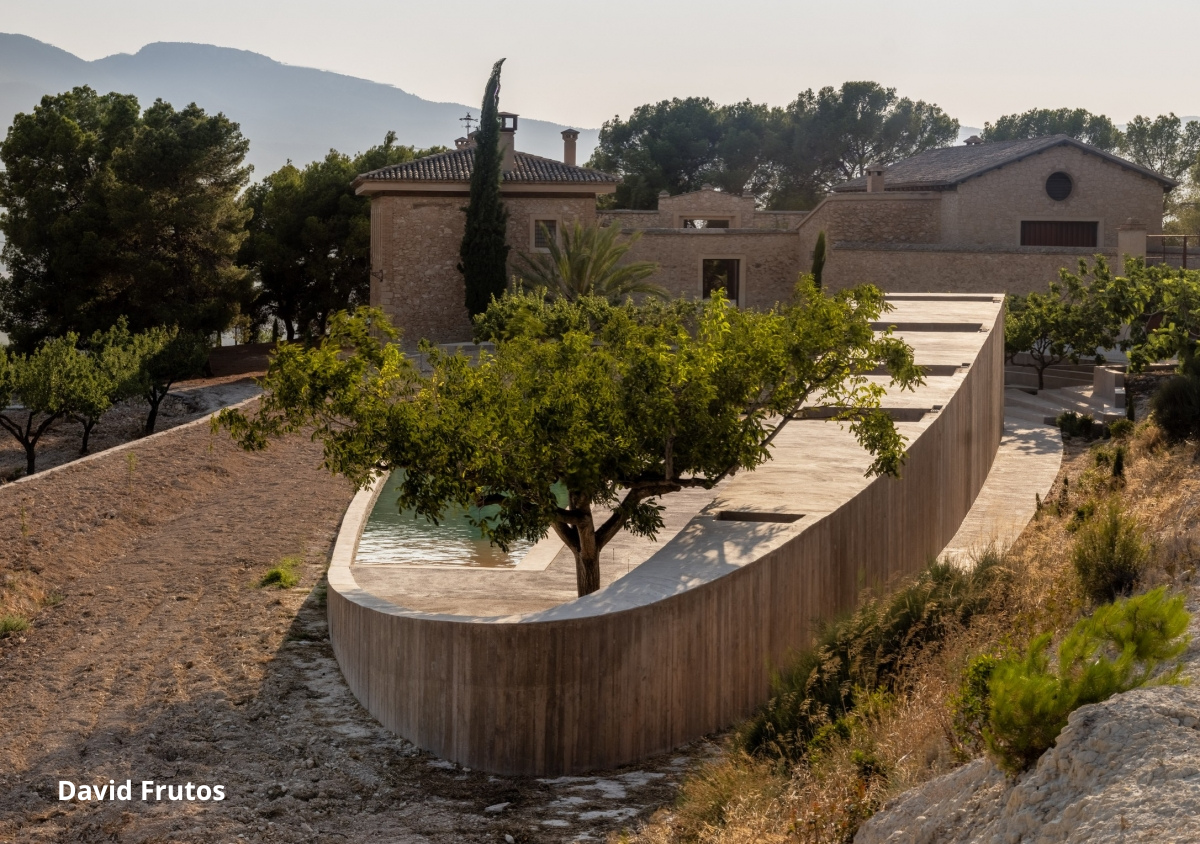
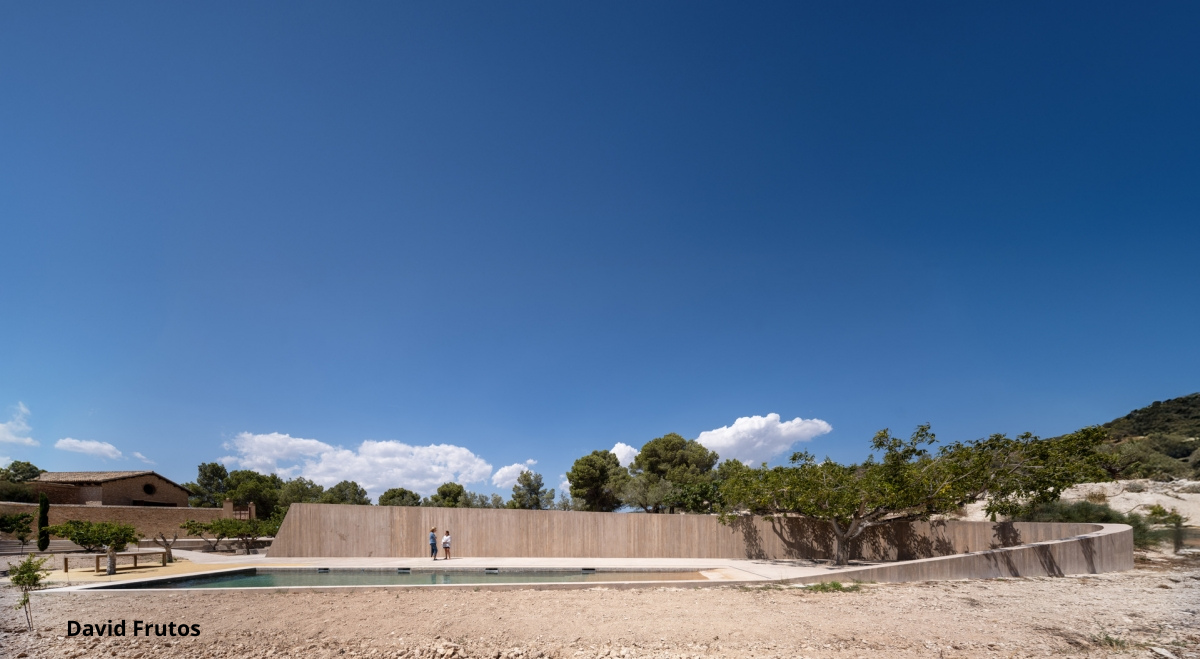
More than just a building, the Tibi Service Pavilion and Pool, designed by the firm noname29—Alfredo Payá, is an exercise in landscape integration—a way of designing in which architecture ceases to impose itself on the landscape and instead becomes part of it. Located on the Planet Blanc farm in the interior of the province of Alicante, the project involves the construction of a swimming pool and a small service pavilion connected to both the existing residence and the farm.
However, its true contribution goes beyond the functional program, as it establishes a respectful relationship between architecture, nature, and human activity, making the environment the true protagonist. Due to its values, which align with the European Commission’s New European Bauhaus initiative, the project has been awarded the NEB Prize: Cultural and Artistic Values at the 2026 Architecture Awards organized by the Higher Council of Architects’ Associations of Spain (CSCAE).
In the proposal submitted to the CSCAE, the firm summarizes this philosophy with a statement of intent: “to establish a symbiosis between architecture and nature, giving a voice to all those involved in shaping the landscape.” This idea takes shape in a project that does not seek to become an iconic object, but rather another element of the landscape that surrounds it. That is why the pavilion, far from competing, adopts a restrained scale and simple materials that engage in dialogue with the topography, vegetation, and traditional water management systems.
Thus, the reservoir—an element deeply rooted in Mediterranean agricultural culture—regains its historical value as a productive infrastructure, albeit reinterpreted through a contemporary lens. Consequently, in contrast to a design practice sometimes characterized by visual impact, Alfredo Payá’s proposal prioritizes discretion and permanence. Thus, it is an architecture that does not demand immediate attention but rather invites discovery through use, the passage of time, and daily interaction with the natural environment.
Furthermore, the project advocates for an ecological transition in which design quality and respect for natural heritage are inseparable. In this case, sustainability is not understood solely in terms of energy or technological parameters, but rather as the ability to intervene with the least possible disruption, reinforcing the site’s existing qualities—in this instance, its distinctly rural character—which highlights that innovation also arises in such contexts.
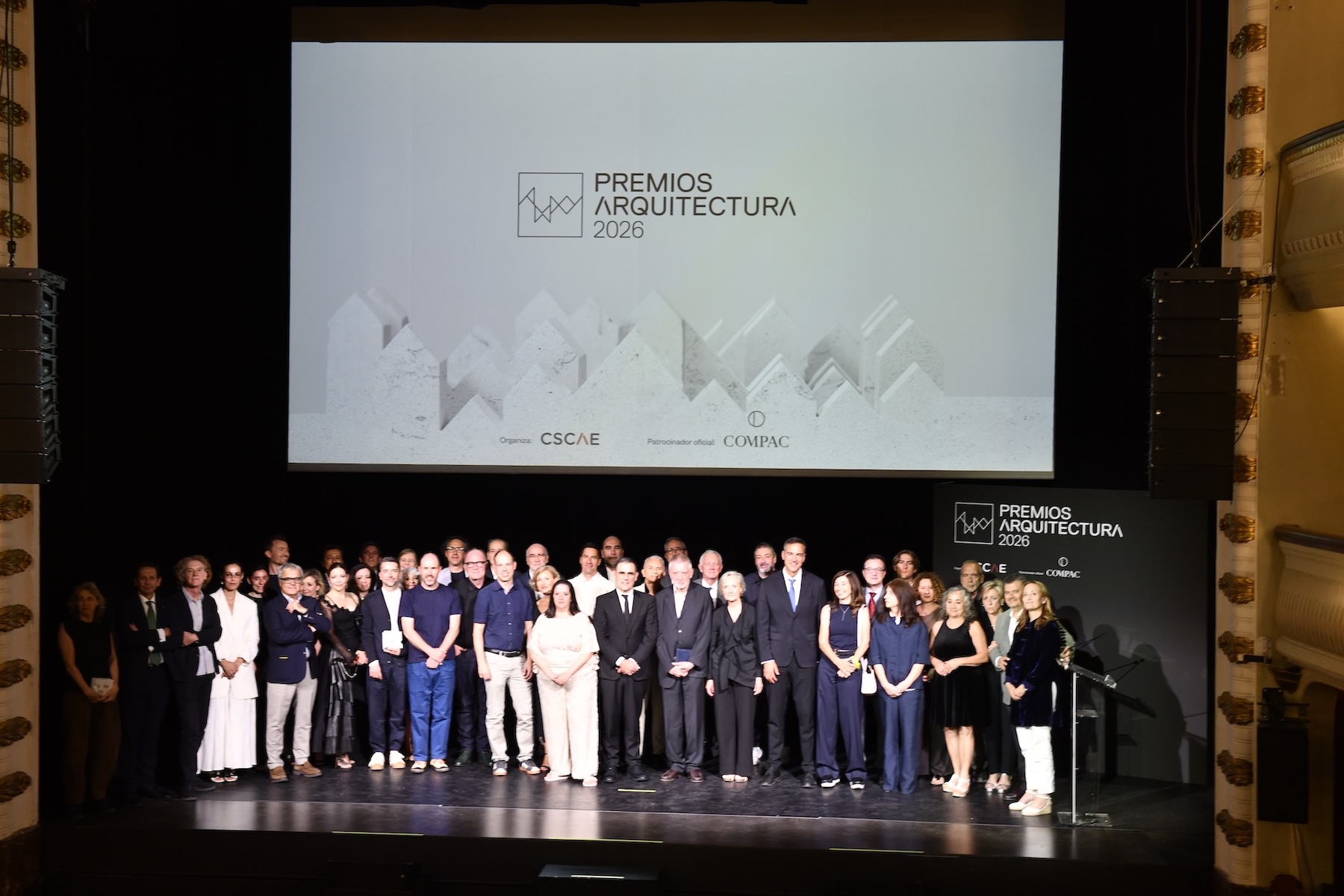
“It’s a field of almond trees, and there’s also a walnut tree, planted more than 50 years ago. The walnut tree is the axis and the focal point of the parabolic shape that defines this space.” These words by architect Alfredo Payá, spoken during the awards ceremony held at the Teatro Alcázar in Madrid, summarize the intention to regenerate the environment through an initiative that champions the coexistence of nature and humanity—or, in other words, a healthy and respectful relationship between people and the place they inhabit.
That is why the Nueva Bauhaus Award, granted by the CSCAE, recognizes much more than a well-built structure: it highlights a design approach in which the landscape ceases to be merely the backdrop and becomes the true project itself.