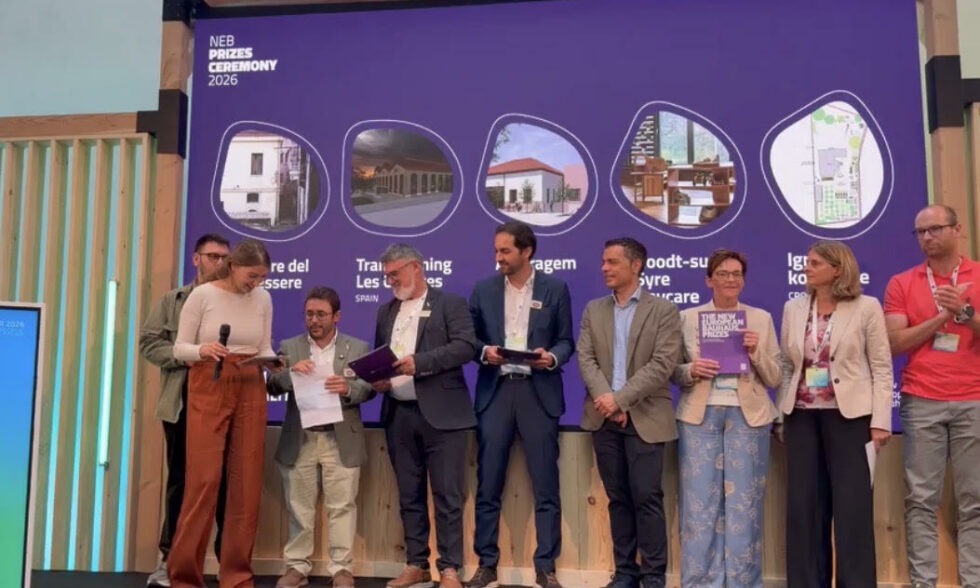
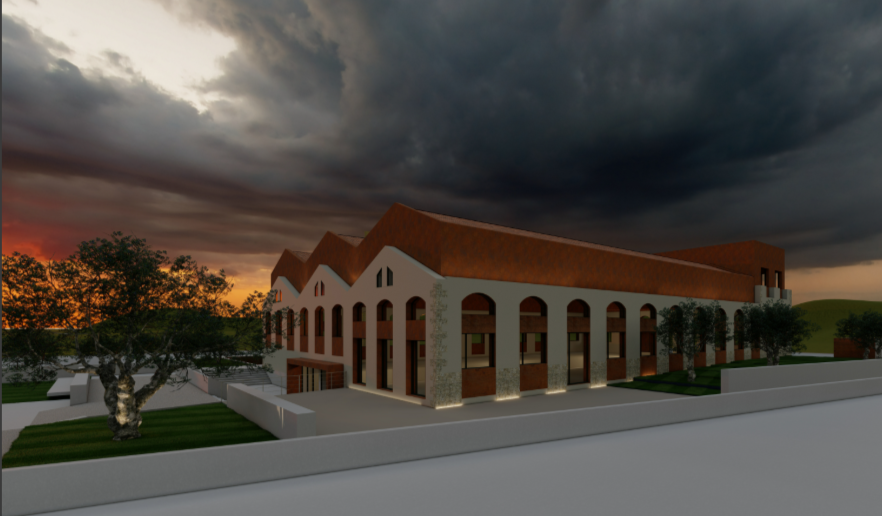
The municipality of Muro de Alcoy, in the province of Alicante, has been recognised, alongside the municipalities of Letur and Arrobitxulo, as one of the winners of the latest edition of the NEB Boost for Small Municipalities for the project Transforming Les Caixetes, an initiative that will restore a former cardboard packaging factory and transform it into a public facility dedicated to culture, training and environmental education. The proposal will receive €30,000 in European funding and forms part of a local development strategy that places built heritage, sustainability and innovation at the heart of territorial transformation.
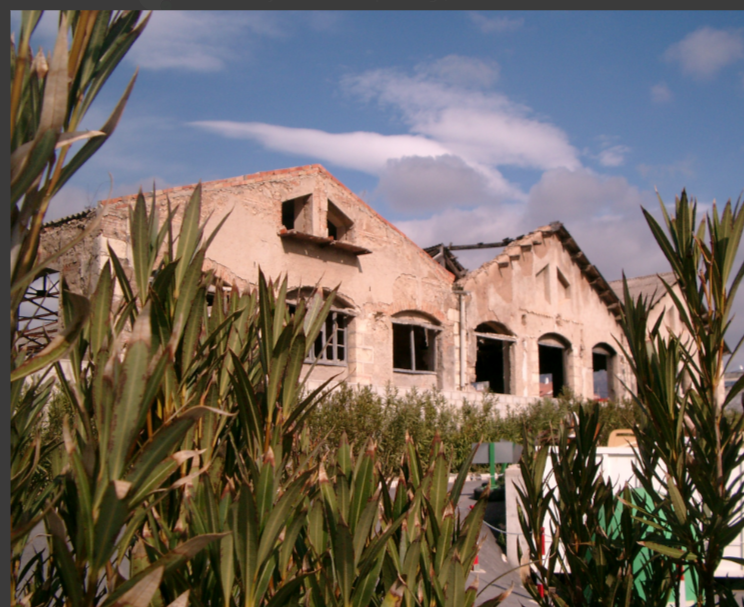
The project centres on the former Les Caixetes factory, built in 1921, which is one of the key elements of Muro de Alcoy’s industrial heritage. Its transformation aims to give this historic building a new lease of life, adapting it to current needs without sacrificing its identity. Rather than replacing the existing heritage, the initiative focuses on its rehabilitation and reuse as a means of revitalising the municipality, creating new opportunities and strengthening the relationship between architecture, culture and the community. The recognition by the European Commission’s NEB initiative highlights this approach to urban regeneration, in which preserving the past becomes an opportunity to build the future.
This project demonstrates how the objectives and methodology of the Spanish Urban Agenda contribute to promoting innovative, sustainable and inclusive initiatives. The project forms part of the strategy known as “Muro Cultural and Innovation District”, which has a development horizon extending to 2045 and aims to consolidate a growth model based on creativity, knowledge and local participation. The future facility will house spaces for
- artistic and cultural activities,
- training in digital fabrication and green skills,
- contemporary crafts and communication projects, and
- environmental education.
It also aims to encourage collaboration between associations, educational institutions, businesses and local groups, creating an environment that facilitates knowledge exchange and the development of new professional initiatives. The application estimates that the project will directly benefit around 500 people and help create opportunities for young people to pursue their careers within the municipality.
The environmental dimension is another key pillar of the proposal. The restoration of Les Caixetes seeks to integrate industrial heritage into a broader vision of the area, connecting the new facility with the ecological corridors near the Sierra de Mariola Natural Park. This relationship between culture, landscape and sustainability extends the project beyond architectural rehabilitation, incorporating connections with the natural environment and the responsible use of resources. Reusing an existing building also reflects the principles of the circular economy by extending the useful life of disused heritage and avoiding replacement as the only way to meet new public needs.
Strategic planning and institutional collaboration are important elements in the development of this initiative. Muro de Alcoy has worked on its local Urban Agenda with technical support linked to the framework of the Spanish Urban Agenda promoted by the Ministry of Housing and Urban Agenda. This work provides a framework for linking heritage regeneration with broader objectives relating to sustainability, social cohesion and urban development. The development of Les Caixetes also forms part of a public investment strategy supported by European funding.
Muro de Alcoy and Cocentaina have coordinated joint actions through a Functional Urban Area, an instrument that enables neighbouring municipalities to coordinate projects. The two town councils will mobilise a joint investment of €7.13 million, of which approximately €4.28 million will come from the European Regional Development Fund (ERDF). The recognition received under the European Boost for Small Municipalities initiative therefore places Les Caixetes among the projects demonstrating how local communities can drive transformations aligned with the principles of the New European Bauhaus.
Ultimately, the proposal brings together sustainability, inclusion and the quality of the built environment through the restoration of an industrial building, the creation of new cultural and educational spaces, and collaboration between local stakeholders. Its value also lies in demonstrating that innovation does not depend exclusively on large cities: small municipalities can draw on their heritage, traditional knowledge and community networks to create new opportunities for the future.