The town of Santa Fe, in the Vega de Granada region, has ushered in a new era for one of its historic buildings. The former Reyes Católicos Elementary School has been renovated to become the new municipal library, a project that goes beyond the mere functional adaptation of an educational building.
Under the title “Where the irrigation ditches sing and the poplars grow,” this project celebrates the town’s agricultural and cultural identity, bringing back to the urban heart elements that defined its landscape for centuries. It was designed by Juan Antonio Serrano García and Paloma Baquero Masats of the firm Serrano + Baquero Arquitectos, who had a clear objective: to transform the library into a space where authors and their works engage in dialogue with the local landscape, history, and nature.
The recovery of identity, the strengthening of a sense of belonging, sustainable features, and the pursuit of inclusion in the new facilities make this project an example of New European Bauhaus best practices. Furthermore, this project, which opened in 2025, has already been recognized with an award at this year’s La Casa de la Arquitectura Awards organized by the Ministry of Housing and Urban Agenda.
From Asphalt to an Urban Poplar Grove
The inspiration for Serrano and Baquero’s project lies in a famous speech delivered by Federico García Lorca in 1931 during the inauguration of the first public library in his hometown, Fuente Vaqueros.
In it, the poet described the Vega as a land where “everywhere the irrigation ditches sing and tall poplars grow.” Nearly a century later, this literary evocation revives and preserves the memory of an agricultural landscape that has been gradually disappearing due to urban growth and changes in land use. The library is thus conceived as a cultural space, but also as a tool to restore residents’ emotional connection to their local area.
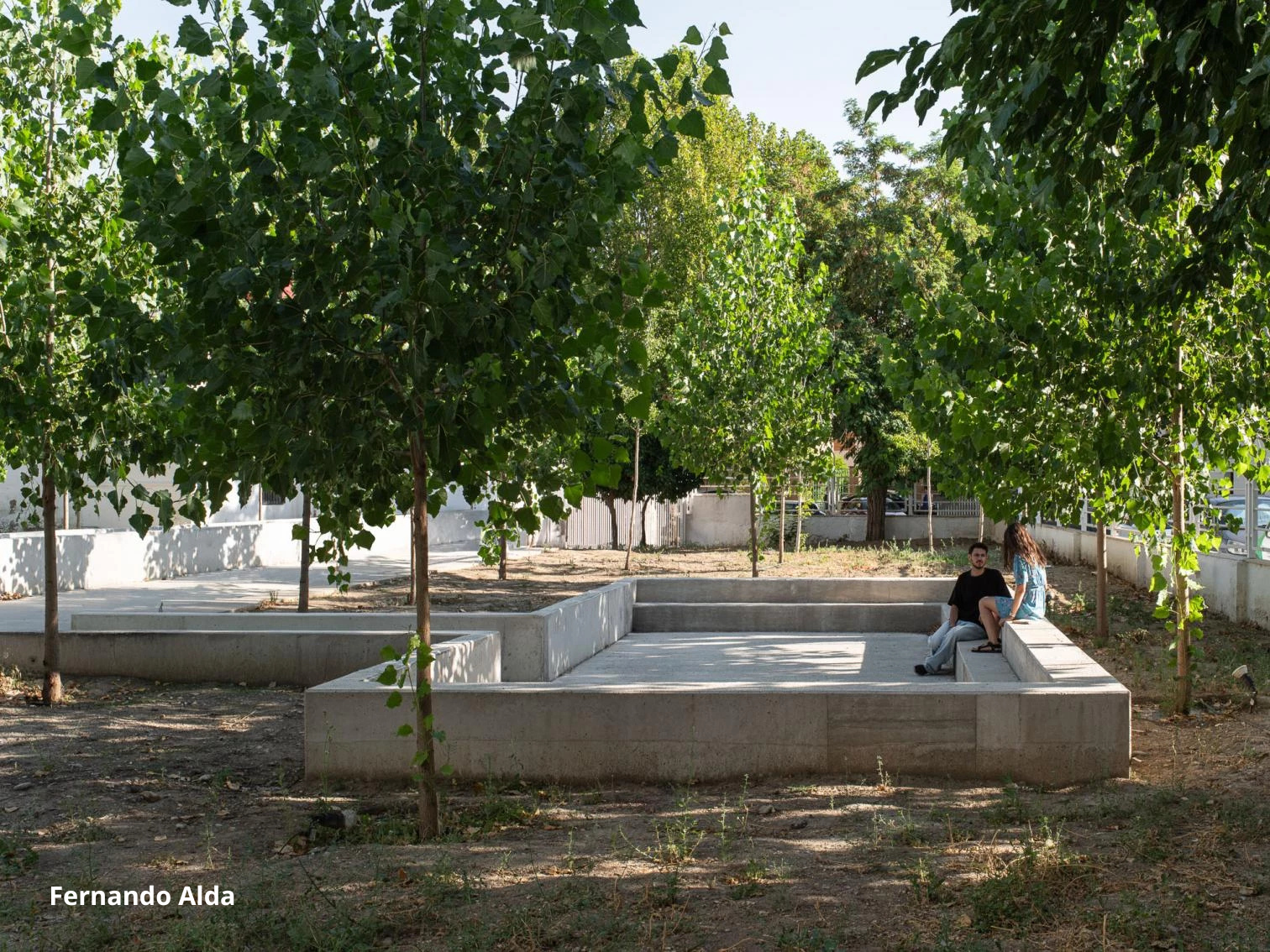
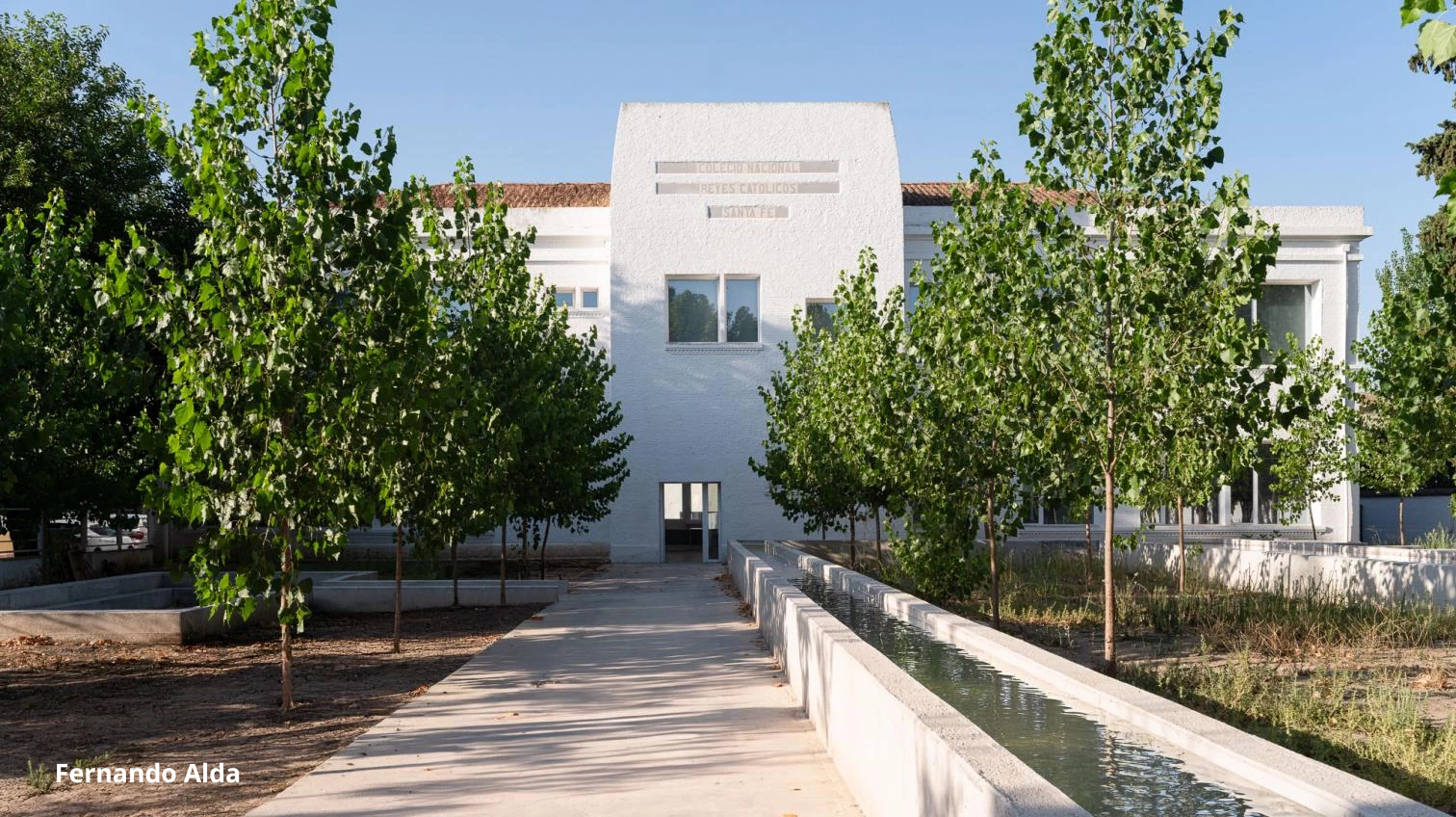
Thus, where there used to be a sports court and a paved parking lot, there is now a poplar grove crossed by a irrigation ditch and dominated by a large pond surrounded by benches and bleachers that invite visitors to read and relax.
The route begins with a water channel that accompanies visitors from the main entrance to the pond. This element not only revives the historical presence of the hydraulic infrastructure that characterized the town of Granada but also introduces a sensory experience based on the sound of water, the vegetation, and the shade of the trees.
The choice of poplar trees is also no accident. According to the project documentation, the loss of these tree formations in recent decades has had a significant ecological and visual impact on the area. The new library thus incorporates a poplar grove that combines environmental, cultural, and identity-related values rooted in the cultural heritage and memory of the region.
Other key aspects of the renovation
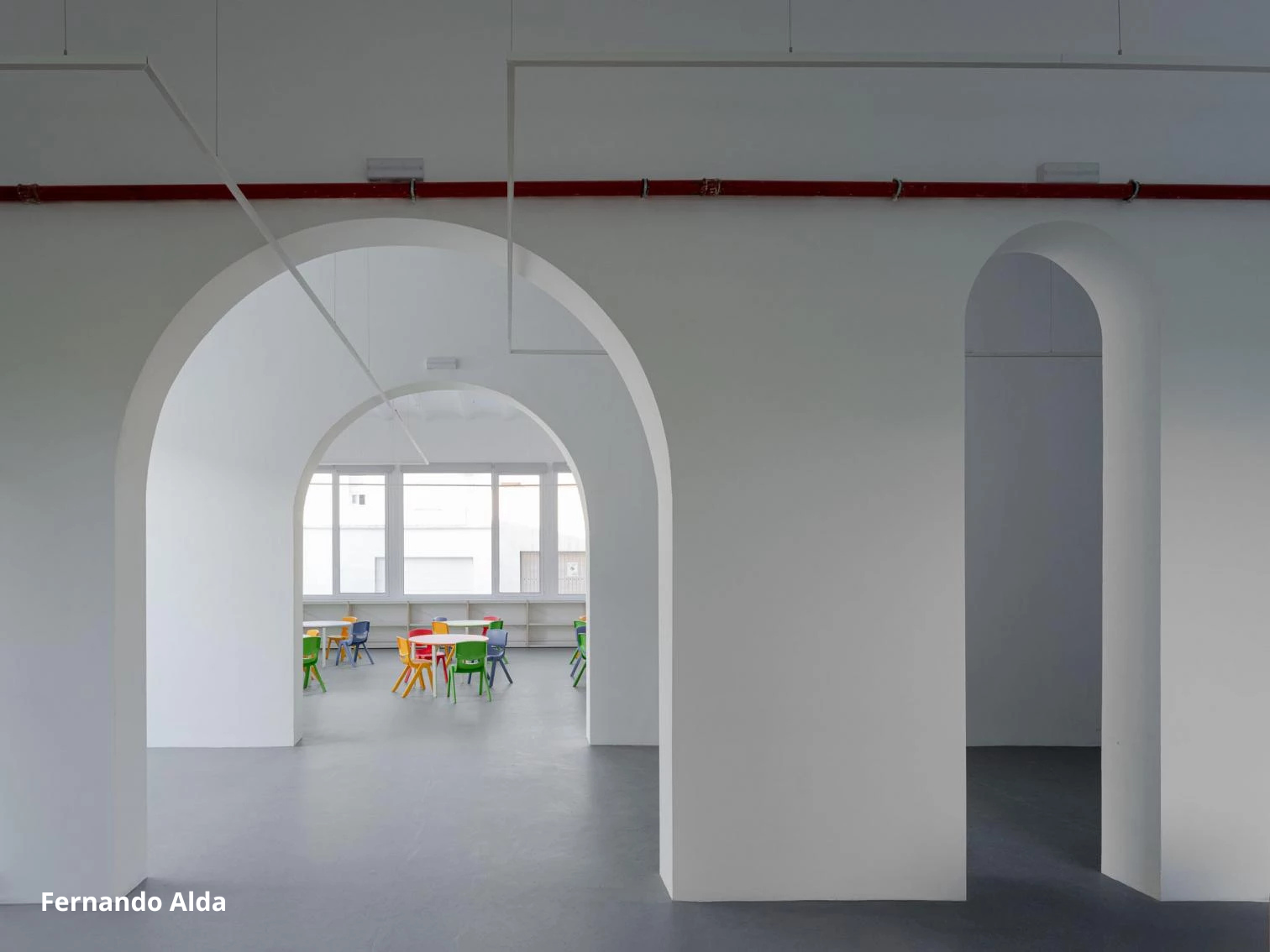
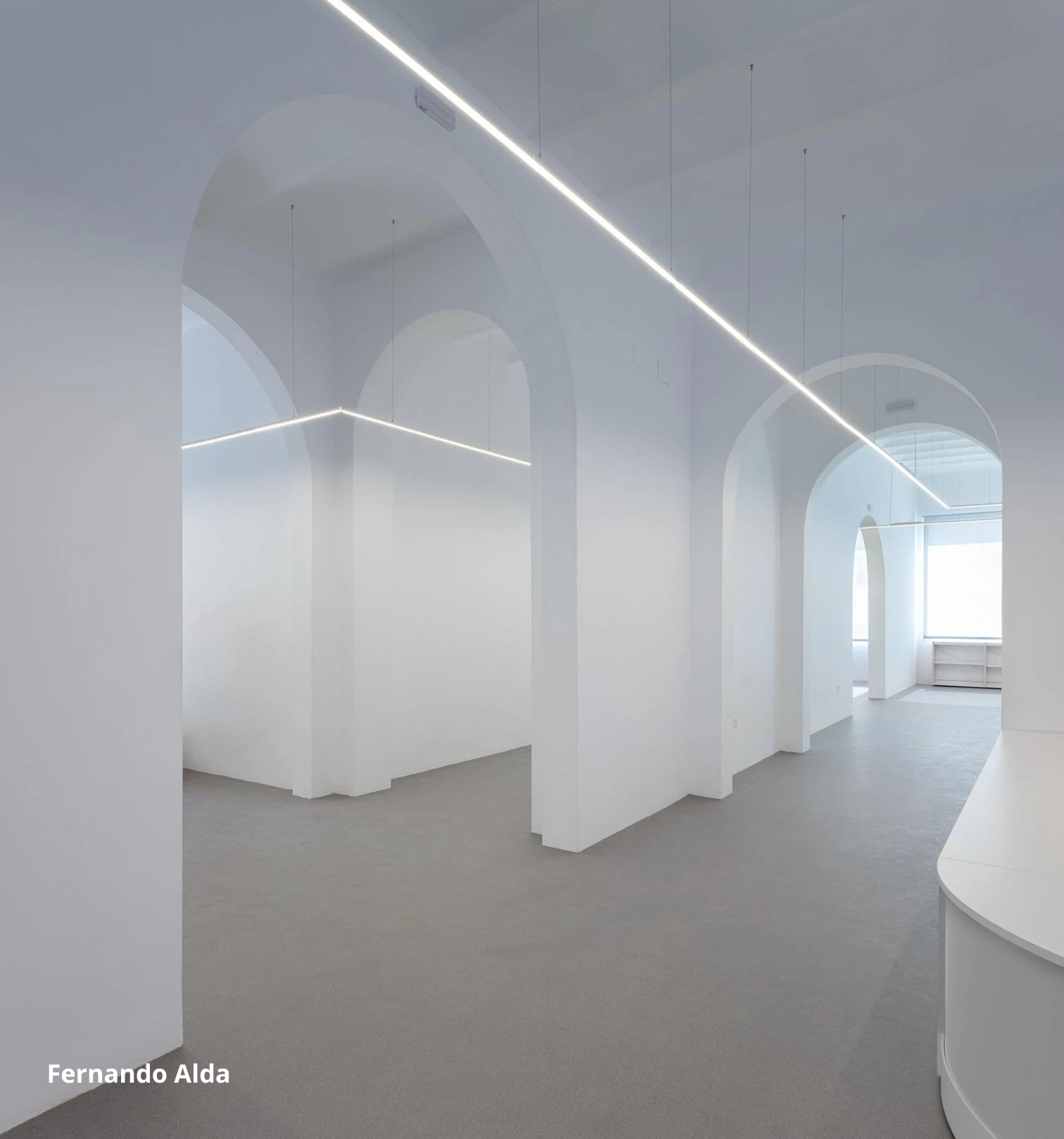
Inside, the renovation focused on restoring the spatial clarity of the former school. Partitions and additions that had accumulated over the years were removed to highlight the building’s original vaults and proportions.
The design is organized through a sequence of white arches that define the reading spaces and create intersecting perspectives. The large transverse arches visually connect the rooms with the poplar grove and the pond, while smaller-scale arches structure the interior layout.
The result is a bright, open library where architecture and landscape merge into a seamless experience. Furthermore, the new concrete paving extends from the exterior into the interior, reinforcing this sense of continuity and blurring the traditional boundaries between the building and public space.
With all these features, the concept of a library is expanded; it is now much more than a place to store books: it is a community gathering place, a climate-friendly refuge created from native vegetation, and a permanent reminder of the relationship between culture, water, and the land that pays homage to Lorca’s legacy.